


Neumann KM184

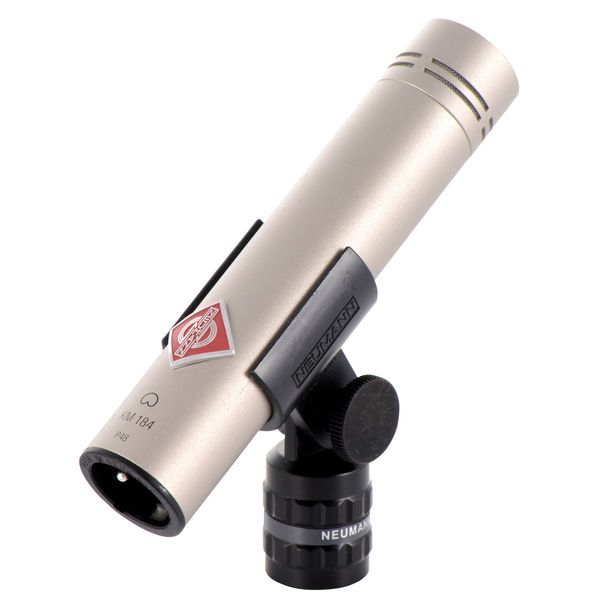
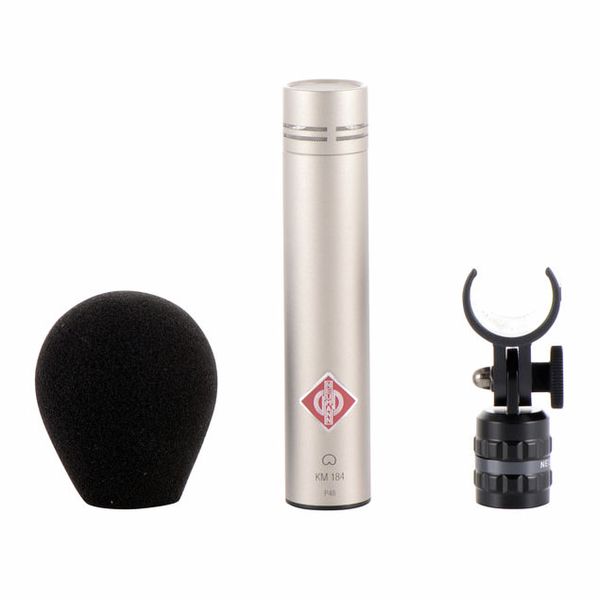
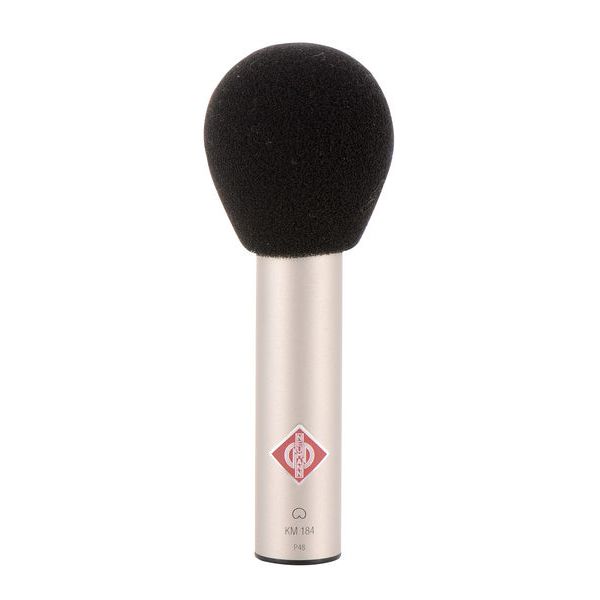
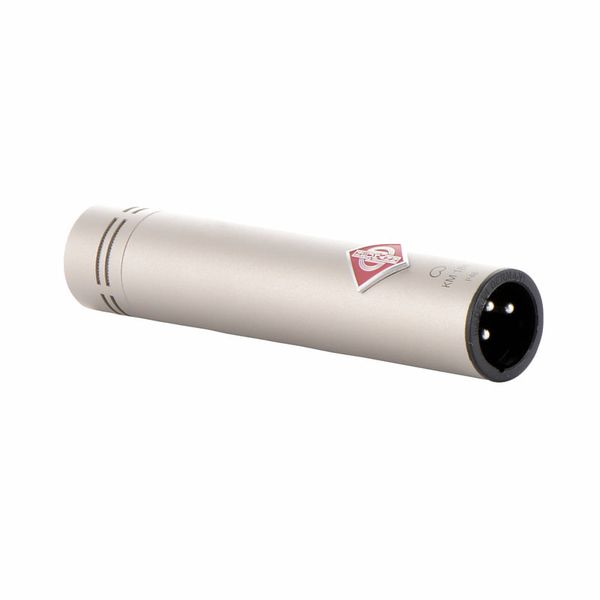
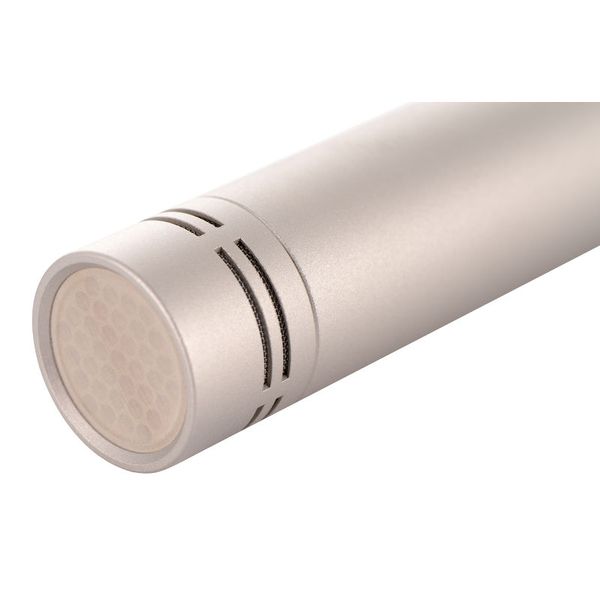
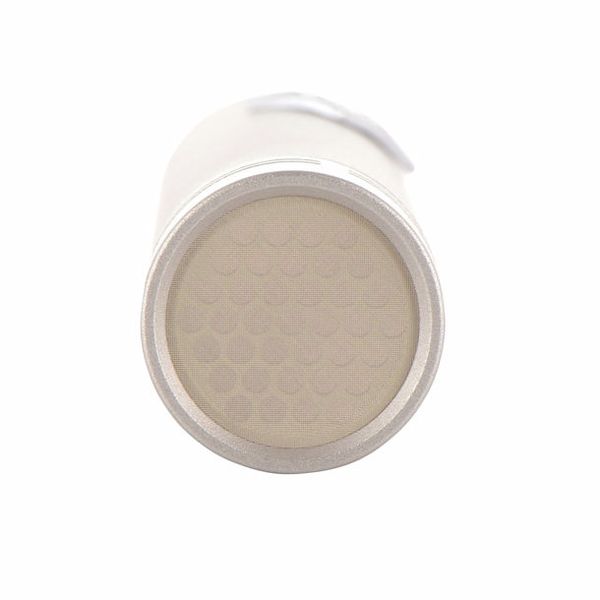
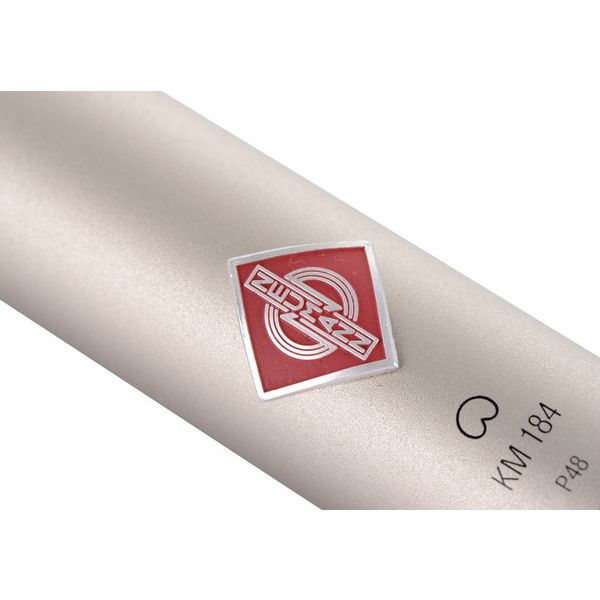


Small Diaphragm Condenser Microphone
- Polar pattern: cardioid
- Pressure gradient transducer
- Successor of KM 84
- Very smooth frequency response not only for the 0° axis, but also for lateral (off-axis) sound incidence
- Frequency response: 20 – 20,000 Hz
- Nominal impedance: 50 ohms
- Rated load impedance: 1000 ohms
- Max. output voltage 2540 mV
- Weight: 80 g
- Diameter: 22 mm
- Length: 107 mm
- Colour: Nickel
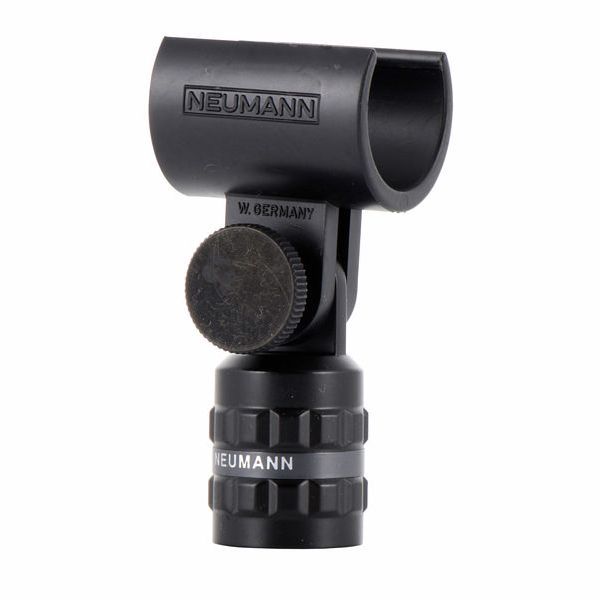
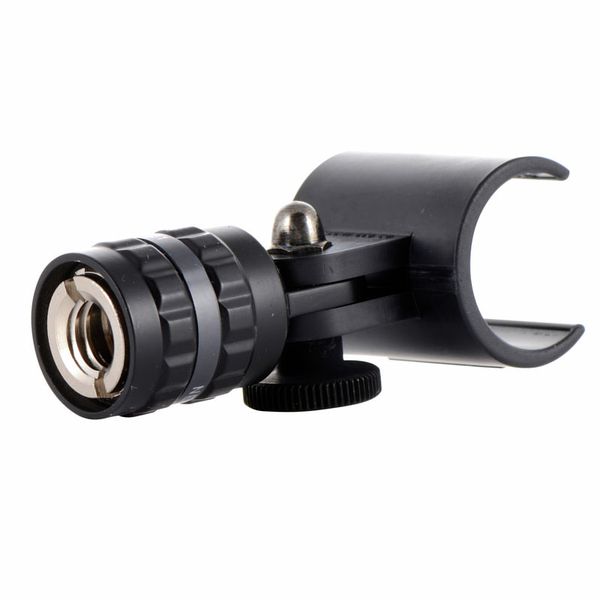
- Includes windscreen and SG 21 stand mount swivel
-
Item number 120310
-
Sales Unit 1 piece(s)
-
Battery Powered No
-
Stereo Pair No
-
Polar Pattern cardoid
The classic condenser microphone
The Neumann KM 184 is a dependable, transparent-sounding small-diaphragm condenser microphone. Thanks to its non-modular design, the microphone is available at an attractive price without sacrificing any of Neumann's renowned engineering, and its combination of a frequency-independent cardioid polar pattern and a smooth linear frequency response provides effective protection against feedback. With genuine 28-bit resolution and an impressive impulse response, the KM 184 is an excellent choice for a wide range of applications in both studios and on stage. The slight treble boost of approximately 3dB between 5 and 15kHz makes the recorded signal sound fresh and easier to integrate into the mix. The only difference between the KM 184 mt model and this classic nickel-finish KM 184 is the mt's matte black finish.

)
The figures don't lie
As the successor to the legendary KM 84, the Neumann KM 184 features the same capsule design as the earlier classic. Unlike its predecessor, however, the KM 184 benefits from a slight treble lift around 9kHz for added brightness. In the low end, the frequency response of the microphone exhibits a slight roll-off, which starts at 100Hz and reaches an attenuation of 3dB at around 80Hz; at 20Hz the attenuation reaches 10dB. However, as the KM 184 is a pressure gradient receiver, artists can take advantage of the proximity effect by moving the microphone closer to the sound source to boost the bass. The low impedance of the output stage (50 ohms!) allows long cable runs of up to 300 metres without any loss in sound quality. With a peak level of 138dB (0.5% distortion), the KM 184 is extremely level-resistant, and the field leakage transmission factor is only 15mV/Pa.
)
The KM 184 can do it all
The transparent sound of the KM 184 is particularly suitable for miking acoustic instruments, from concert grand pianos, strings, and woodwinds to acoustic guitars, drumkits, and other percussion instruments. Although the KM 184 is not specifically optimised for the human voice, it is often used for Classical vocals and whenever sonic authenticity is paramount. Thanks to the mic's frequency-independent cardioid polar pattern, multiple devices are especially effective in creating stereo or surround sound recordings with precise spatial imaging, for example using AB, XY, or ORTF configurations. However, the KM 184 is also a faithful companion as a support microphone for individual instruments or sections of an orchestra.
)
About Neumann
Georg Neumann GmbH was founded in Berlin in 1928 - and is certainly one of the most famous brands of microphones in the world. However, this is not the company's only sphere of activity. For many years, the versatile inventor and pioneer Georg Neumann was also involved with vinyl record cutting machines and the development of rechargeable batteries. The technology he developed is still the basis for this now crucial and rapidly expanding market. What is more, for many years the company built highly personalised sound control systems for broadcast studios/theatres and concert halls, and for several years also studio monitors. In 1991, Neumann became part of the Sennheiser group of companies, and in 1999 was the first German company to receive the Technical Grammy for their overall technical achievements.
A focus on quality without the frills
The Neumann KM 184 dispenses with the frills associated with more expensive microphones – such as changeable polar patterns, pad switches, and low-cut filters. Instead, by focusing on the essentials, Neumann is able to offer a musicians and engineers a mic unrivalled in terms of sound quality at this price point. This philosophy extends to the included accessories, as the mic ships with Neumann's proprietary windscreen and mic clamp. Wherever it's used, whatever it's used for, the KM 184's finely detailed and realistic sound reproduction makes it the perfect microphone for making recordings where no technical sound colouration is required or desired.
)
In the spotlight
Frequency-independent polar pattern
The directional characteristic of a microphone refers to the way a microphone "listens" as well as how well it rejects sound from other directions. Depending on the type of microphone, these characteristics can change depending on the frequency. For example, in large-diaphragm condenser microphones with a cardioid polar pattern, the pickup pattern typically becomes more focused at higher frequencies. However, a unique feature of Neumann's KM 184 is that its cardioid pattern remains consistent across all frequencies. This is highly beneficial when recording multiple instruments in a group, as the sound remains consistent without incurring distortion from different directions – only the volume varies due to the cardioid pattern's on-axis bias.
)
This is what customers who viewed this product bought

Accessories & matching items



Compare options
-
Neumann Small Diaphragm Condenser Microphones at a glance
-
Display Small Diaphragm Condenser Microphones from kr 9250 - kr 9750
-
Go to product group Small Diaphragm Condenser Microphones
-
Go to product group Overhead Microphones
-
Go to product group Microphones
-
Show manufacturer details for Neumann
-
Neumann Microphones at a glance