


the t.amp S-100 MK II

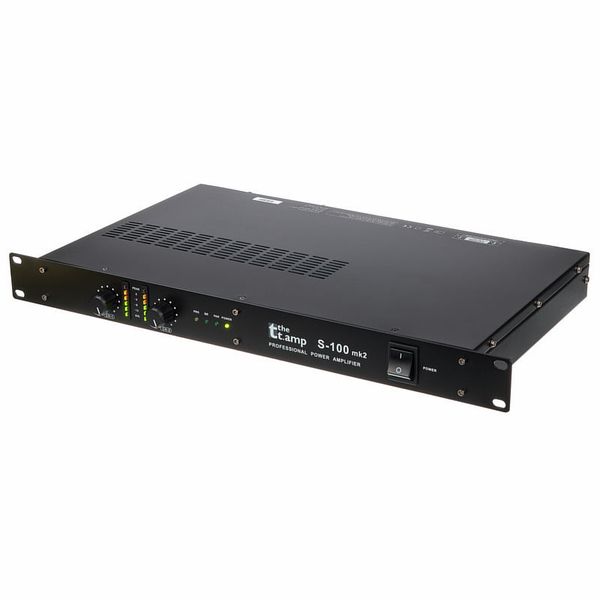
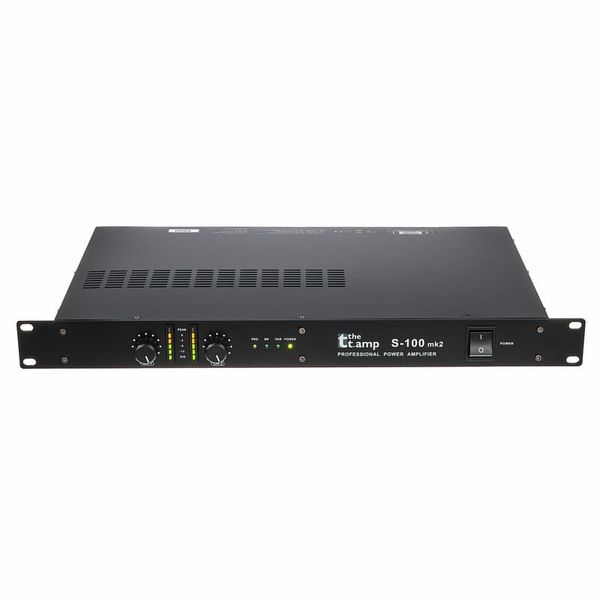
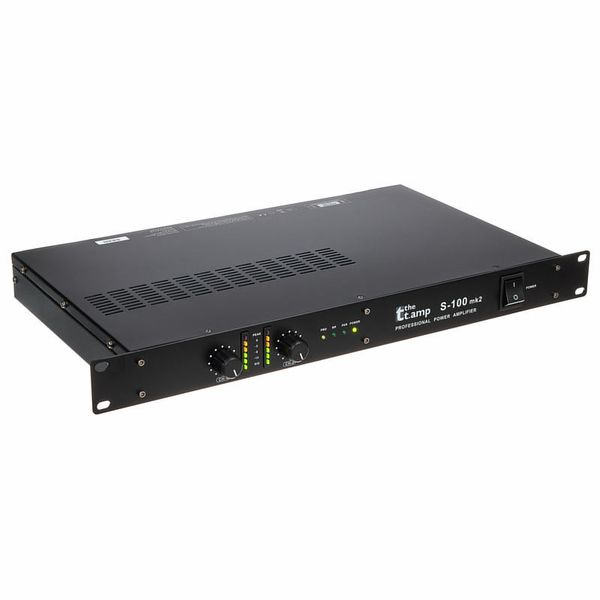
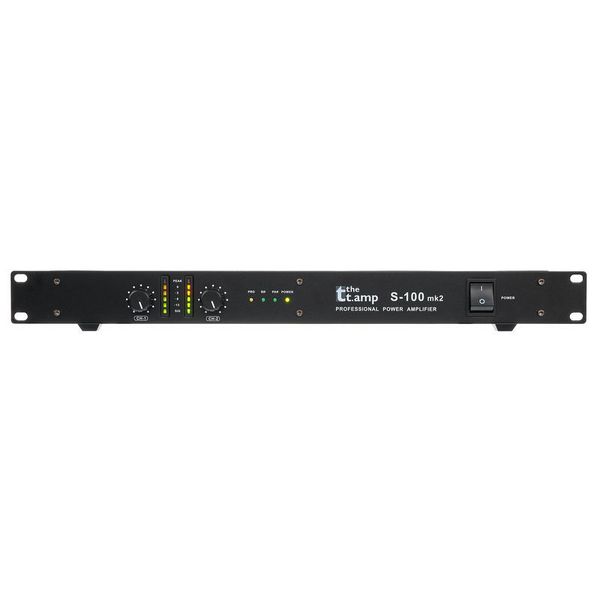
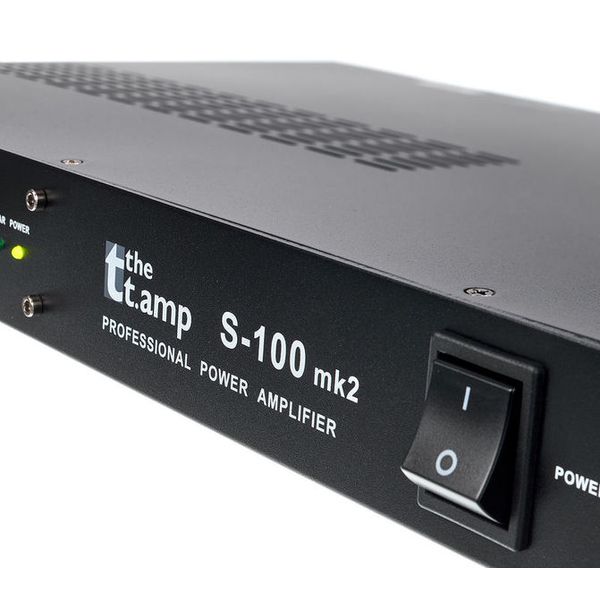
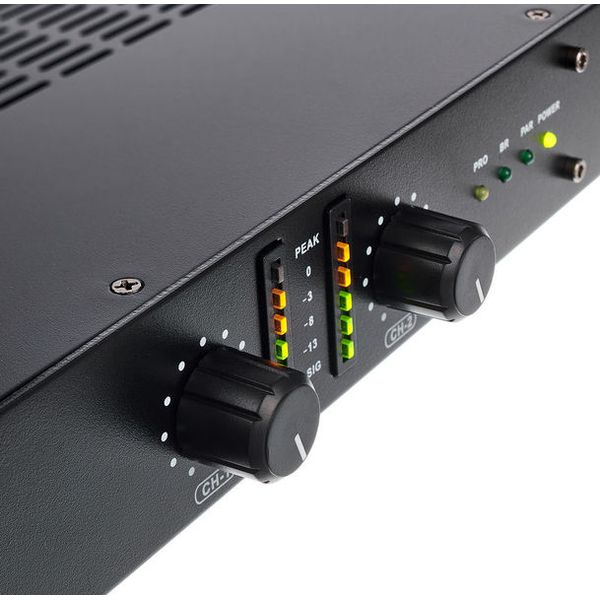


Power Amplifier
- 2x 100 W at 4 ohms
- 2x 65 W at 8 ohms
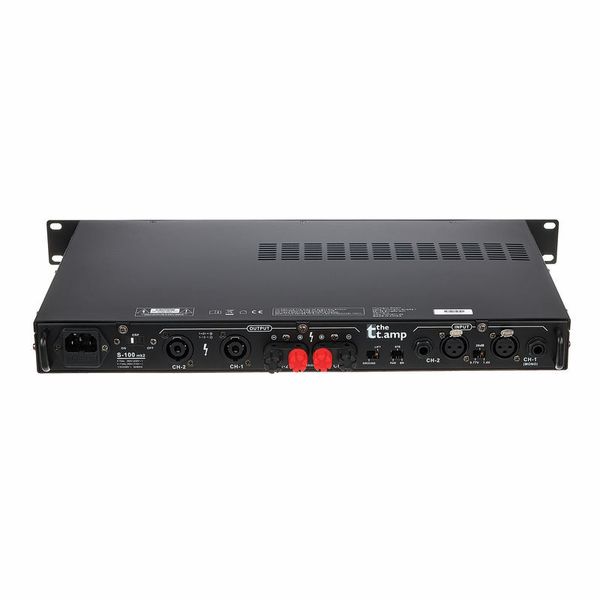
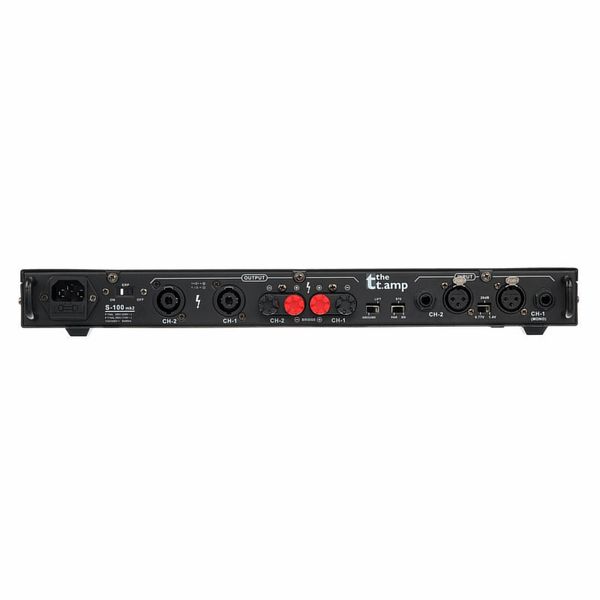
- Balanced inputs with XLR and jack
- Bridge mode possible
- Speaker Twist and binding posts for speaker out
- All protective circuits including soft-start
- Input level switchable from -0 to +4 dB
- Damping factor > 150
- Without fan
- Input sensitivity switchable from 0.775 V (RMS) to 1.4 V RMS, or to 26 dB gain
- 1 RU, 33 cm deep
- Slew rate: 35 V/µs
- Weight: 7.5 kg
-
Available since October 2000
-
Item number 144356
-
Sales Unit 1 piece(s)
-
Power (4 Ohms) per Channel 100 W
-
Channels 2
-
Rack Units 1 U
-
Amp Class Class AB
-
2 Ohm stable No
-
DSP/Crossover No
-
Convection cooling Yes
-
Width 483 mm
-
Depth in mm 330 mm
-
Height 44 mm
-
Weight 7,5 kg
-
Bridged Mode Yes
-
Input XLR Yes
-
Jack Input 6,3 sym. Yes
-
Parallel Input Yes
-
Link Out No
-
Output Speaker Twist Yes
-
Output Binding Post Yes
-

Refined, sensitive, faithful
Impressively refined monitoring performance, that's the wheelhouse of the S‑100 MK II, a two‑channel power amplifier developed by Thomann's in‑house brand the t.amp. Yet this is an amplifier whose sound will also make fans of high‑end hi‑fi sit up and take notice, thanks to its linear response and faithful transient reproduction. Given its design and power output, a cooling fan isn't necessary, which means there's no background noise to contend with. Looking at the connection options on the S‑100 MK II – whose output sits neatly between the S‑75 and S‑150 models – its flexibility quickly becomes apparent. This is reflected in the two different socket types provided for both inputs and outputs. What's more, the relatively lightweight S-100 fits into a single rack unit and, with its switchable input sensitivity, can be easily matched to the level of existing power amps in a system.
)
Quiet yet powerful
The Class‑AB amplifier at the heart of the S-100 features a built‑in limiter and delivers a maximum output of 200W in bridged mode at 8 ohms, with a damping factor of over 150. Even so, it manages without a fan, relying instead on quiet convection cooling. When it comes to inputs and outputs, there's plenty of choice: Balanced jack and XLR inputs are available, while speaker connections can be made via Speakon‑style twist connectors or traditional binding posts. A switch allows the input sensitivity to be set to 0.77V, 1.4V, or 26dB, making it easy to match the output level to other power amps in the system. Housed in a chassis measuring 483×330×44mm and weighing 7.5kg, the power amp is rack‑mountable, fitting into a single rack unit. Alongside stereo and parallel modes delivering 2×65W at 8 ohms or 2×100 W at 4 ohms, it also supports bridged operation, for 200W at 8 ohms.
)
For studio work and home hi-fi
For studio owners, the t.amp S.100 offers excellent monitoring qualities thanks to its uncoloured sound, further supported by the quiet convection cooling. Both sound engineers and home‑recording enthusiasts benefit from the wide range of connection options for mixing desks, recording gear, and speakers. And anyone looking to upgrade their home hi‑fi system can connect any hi‑fi speakers rated to suit the amp's output directly to the output terminals. And if the amp is meant to sit discreetly at home, perhaps tucked away where it can't be easily reached, the ERP switch comes into play: Once activated, the amplifier automatically enters standby mode after 20 minutes of inactivity.
)
About the t.amp
the t.amp is one of the many in-house brands belonging to Musikhaus Thomann, and since 1998 has offered power amplifiers, complete passive PA sets, keyboard amplifiers, and connection systems. The brand’s entire product range delivers an impressive combination of quality and reliability at attractive prices, and users can find a convincing and affordable solution for every application: From youth clubs and sports halls through to congress centres and much more.
Flexible and reliable
If flexibility or mobility is the name of the game, the S‑100 MK II can simply be placed on its rubber feet. Better protection, however, is offered by mounting the amplifier in a classic 19" rack. To ensure adequate airflow, it's advisable to leave one rack unit free above the amp. The audio source is then connected to the inputs, and the speakers to the outputs, using the suitable line and speaker cables, all of which are sold separately. In stereo mode, both output stages operate independently, each reproducing its own input signal. In parallel mode, a single source is connected to the first input and routed to both outputs, with the overall level controlled via the volume knob on channel one. Finally, in bridged operation, the signal is again fed into the first input only, but this time it's sent exclusively to output one –delivering double the power.
