

To the page content

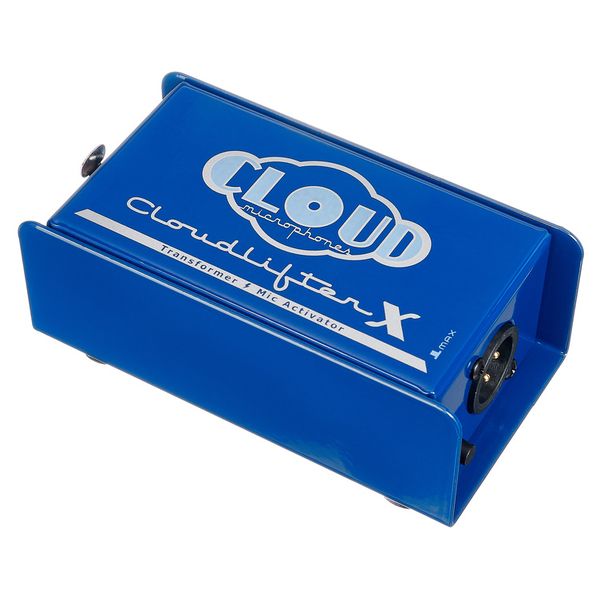
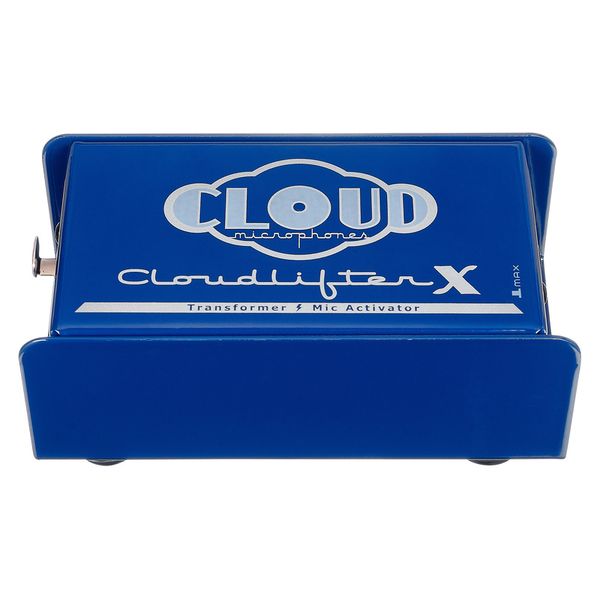
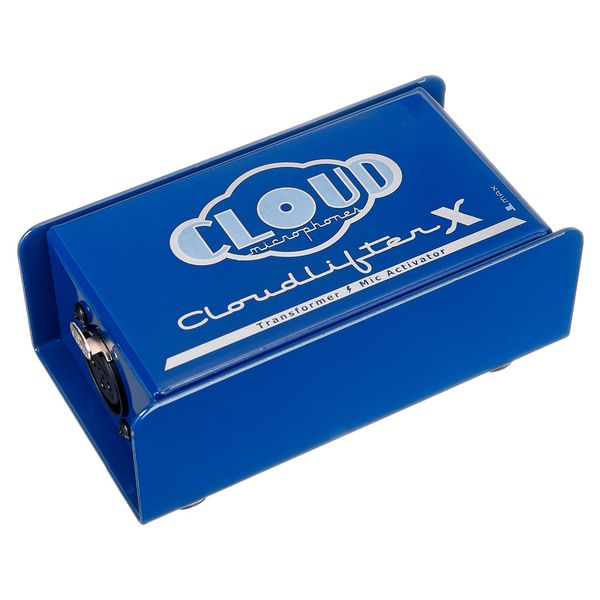
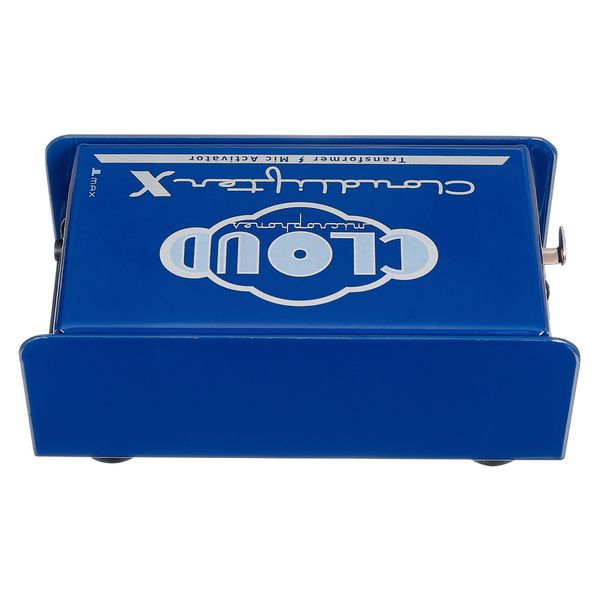
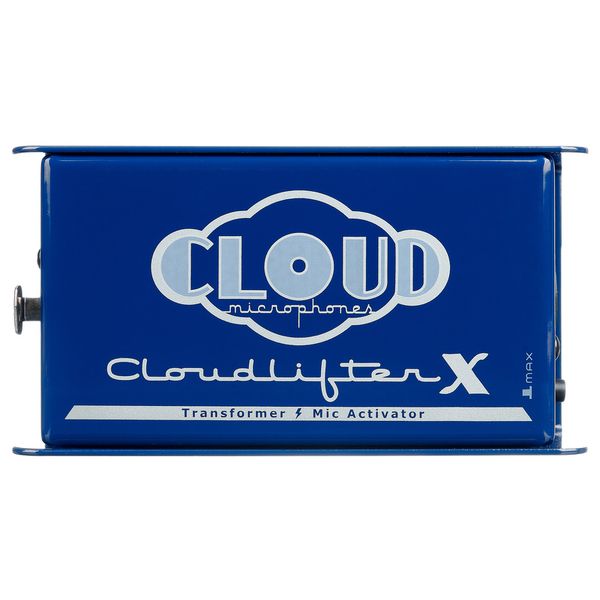
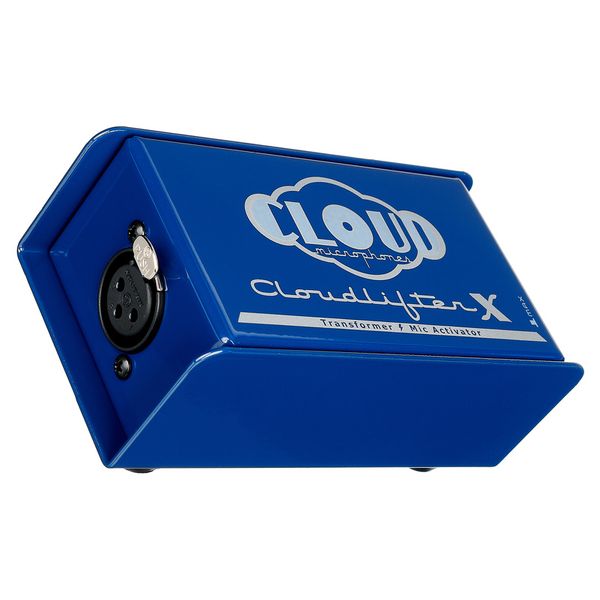
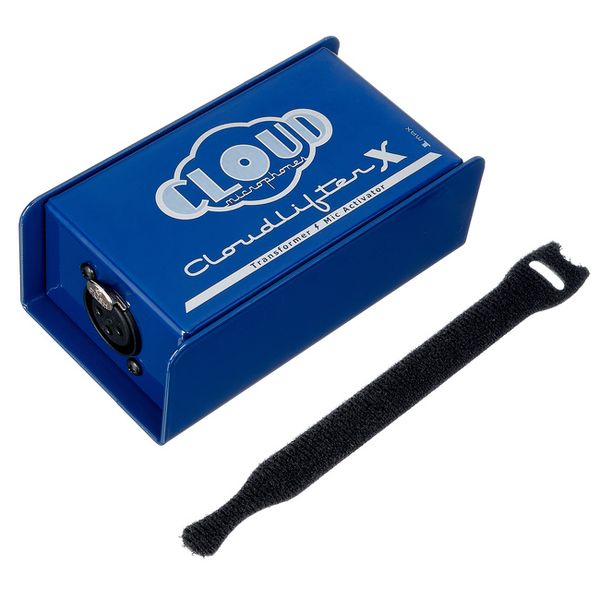
Cloud Microphones Cloudlifter CL-X

4.1 out of 5 stars from 7 customer ratings ()

Mic Activator

  • With Cinemag transformer
  • 1-Channel level amplifier with up to +36 dB gain
  • Suitable for ribbon microphones, tube microphones and dynamic microphones
  • Operation with +48V phantom power (safe for passive ribbon microphones - no passing on of phantom power)
  • Improves the signal-to-noise ratio and increases the microphone sensitivity
  • +12 dB or +36 dB gain selectable via switch
  • Frequency range: 5 Hz - 80,000 Hz
  • Metal housing
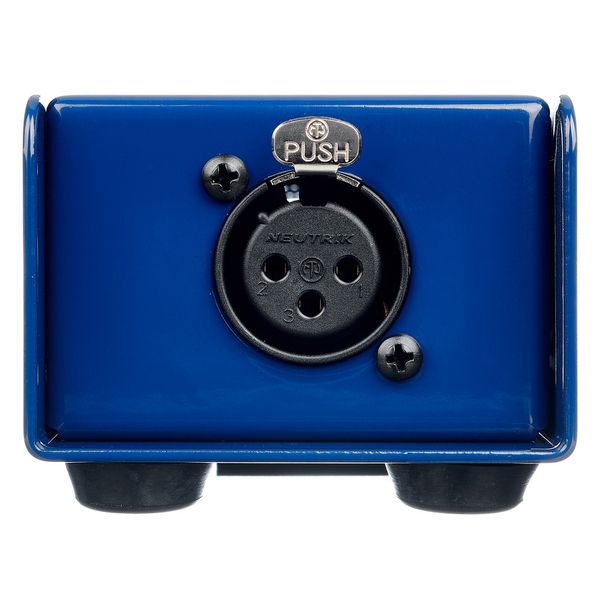
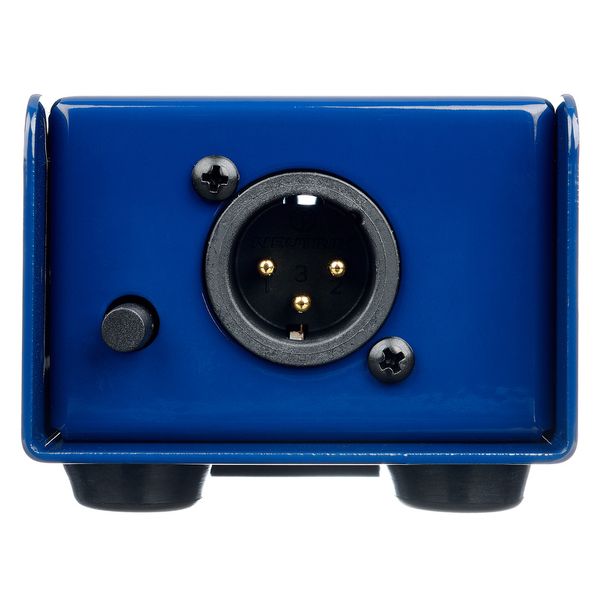
  • XLR input and output
  • Dimensions (W x D x H): 120 x 49 x 49 mm
  • Weight: 320 g
  • Available since September 2024
  • Item number 600866
  • Sales Unit 1 piece(s)
  • Channels 1
  • Number of microphone inputs 1
  • Instrument input No
  • Tubes No
  • Compressor/Limiter No
  • Equalizer No
  • De-Esser No
  • Phantom power No
  • Phase Reverse No
  • External effect loops No
  • Analogue Outputs XLR
  • Digitale Outputs -
  • Headphone connection No
  • Level Meter No
  • Design Desktop
2.750 kr
All prices incl. VAT
In stock
1

Instant character, in-line gain

The Cloudlifter CL-X serves the same core function as the rest of the Cloudlifter range – pulling usable signal from ribbon, dynamic, and valve microphones with low output levels – but takes a fundamentally different approach to how it gets there. Where the CL-1, CL-2, and CL-Z are designed for the cleanest, most transparent gain possible, the CL-X deliberately shapes the character of the signal. The Cinemag transformer at the heart of the design provides excellent noise isolation while adding tonal colour and musicality. Depending on the microphone used and the gain settings, the CL-X adds low-mid warmth, gentle transient smoothing, and the subtle harmonic enrichment associated with classic transformer-based circuits. Compact enough to disappear into any signal chain, sturdy enough for stage and touring use, the CL-X is a gain stage and tone shaper in a single in-line unit.

Cloud Microphones Cloudlifter CL-X, in-line mic gain with transformer character

Plenty of gain...

The Cloudlifter CL‑X pairs its Cinemag transformer with an active gain stage delivering up to +36dB – enough headroom for the quietest passive ribbons and low-output dynamic broadcast mics. A two-position switch reduces this to +12dB for louder sources or situations where the transformer character is wanted but the full gain isn't. At +36dB the transformer's contribution is more pronounced – low-mid density, transient rounding, and harmonic saturation all become more audible as the gain stage works harder. At +12dB the effect is subtler, closer to the transparent end of the range while retaining the Cinemag's tonal signature. Like all Cloudlifters, the CL-X draws 48V phantom power from downstream and blocks it from reaching the microphone, keeping passive ribbon mics safe by design.

Cloud Microphones Cloudlifter CL-X, in-line mic gain with transformer character

...for focused functionality

The CL-X suits engineers and recordists who want transformer colour at source – voices that benefit from low-mid intimacy, broadcast speech, spoken-word podcasts, guitar and bass amplifiers, brass and woodwind, and complex acoustic instruments where a touch of harmonic richness and transient smoothing improves the recorded result without any additional processing downstream. The phantom-blocking design makes it safe for sensitive passive ribbons, where the combination of protection and transformer character is particularly useful. For engineers who want tonal control without committing to a fixed transformer sound, the Cloud Microphones also make the CL-Z, with a variable-impedance dial that offers a different kind of shaping – leaner and more adjustable, without the Cinemag's harmonic contribution.

Cloud Microphones Logo

About Cloud Microphones

US manufacturer Cloud Microphones has been developing and manufacturing microphones and microphone preamps since 2009. Company founder Stephen Sank draws on a family tradition in microphone design that now spans three generations. The range includes ribbon microphones that follow in the tradition of classic RCA models, while combining this heritage with modern design and the company's own patented technologies. Alongside these sits the Cloudlifter line of preamp units. Designed as inline devices, they use the phantom power available at microphone inputs to provide clean, noise‑free signal gain for dynamic and ribbon microphones, without adding unwanted tonal colour. Cloud Microphones has built its reputation not only on the exceptional robustness of its devices, but also on the fact that all components are manufactured in the United States.

Simple, powerful, effective

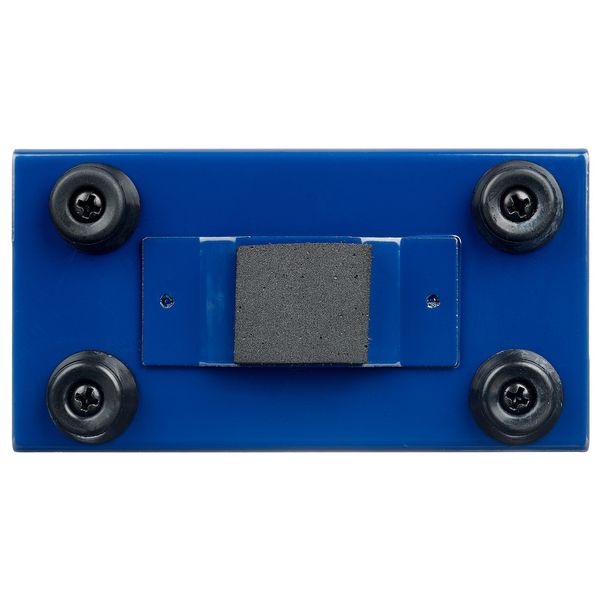
The CL-X connects between microphone and preamp via standard locking XLR connectors, with no configuration beyond the single gain switch, and no power supply beyond the phantom power the downstream preamp already provides. The integrated rear bracket mounts it to a mic stand alongside the microphone; four non-slip feet keep it stable on a desk or console surface. In practice, both signal-to-noise ratio and headroom improve immediately: voices gain intimacy and presence, broadcast speech takes on low-mid body, acoustic instruments pick up harmonic richness – all before the signal reaches the preamp. The CL-X has a well-defined role and carries it out brilliantly – one switch, one transformer, one decision: how much character to add.

7 Customer ratings

4.1 / 5

handling

features

sound

quality

6 Reviews

I
The best preamp you will need
IskanderHero 05.04.2026
I bought It for my SM7B. I was ussing a fretthead, which was nice and doing its work, but i was feeling that the sound wasn't as good as It should. I always felt that the gain I had to put on it for the sound to be clear was either too much or i had to be too close to the mic.
The CL-X did what i was expecting and more. The preamp is not a very noticeable part of your system, or at least not an easy one to point at when looking for a better sound. As soon as I plugged it and pressed the +12 button, i was relieved. That's what i was looking for. That's what i needed to lower the gain and not be so close to the mic all the time.
Must buy if your microphone needs a standalone preamp, worth every Penny/cent
handling
features
sound
quality
0
0
Report

Report

google translate de
Unfortunately there was an error. Please try again later.
N
Top Gerät
NoahSchnee 30.11.2025
Ich nutze den Cloudlifter hauptsächlich mit einem SM7b an einem Neumann MT48 für Vocals. Das SM7b direkt ins Interface bringt für meinen Geschmack zu viel Rauschen hoch, obwohl das MT48 locker genug sauberen Gain liefern kann. Das Mikrofon über den 1073 preamp funktioniert wunderbar, absolut rauscharm! Jedoch gefällt mit der Klang nicht so gut mit der Färbung des preamps. Direkt am MT48 klang es besser. Eigentlich wollte ich den „normalen“ Cloudlifter oder alternativ den FetHead von Triton, jedoch war der CL-X in einem unschlagbaren Angebot verfügbar. Ich muss sagen mir gefällt der Klang super, der Cinemag Übertrager färbt nicht zu sehr, bring aber nochmals ein kleines bisschen mehr Sättigung. Für meine Zwecke eine super Lösung.
handling
features
sound
quality
0
0
Report

Report

google translate de
Unfortunately there was an error. Please try again later.
OV
Cooles blaues Tool!
Ola V 26.12.2025
direkten Vergleich hatte ich folgende Inline-Preamps vor Ort …
- SOYUZ The Launcher +26dB
- CloudMicrophones CL-X +35dB / 12dB
- Triton Transformer +28dB
- Triton Germanium +29dB
- Triton Kompressor +25dB (ohne Kompression)

Getestet mit
Shure 5575LE 1,53mV / Pa
Sennheiser MD421 2mV / Pa
Shure SM58 1,6mV / Pa
Shure 565SD Unidyne I 1,6mV / Pa
Shure SM57 1,6mV / Pa
Sennheiser e935 2,8mV / Pa

An folgenden Interfaces
- Universal Audio Apollo Twin X (ohne Preampemulationen)
- Neve 88M
- RME Babyface Pro FS

Da ich ein Fan von Übertragern bin, waren freilich der CloudLifter-X, der Triton Transformer und der SOYUZ The Launcher interessant.

Zum Launcher
… kann ich wenig sagen, da er defekt bei mir ankam. Schon beim Anheben waren lose Teile im Inneren hörbar.
Nach dem Aufschrauben offenbarte sich die Quelle der Geräusche, die Lötpunkte an der Büchse, in der die Schaltung gekapselt sein sollte, waren gebrochen und die Dose bewegte sich hörbar durch das Gehäuse. Ich habe den Deckel wieder auf die Büchse und den Deckel wieder zusammengedrückt und auf ein verwertbares Ergebnis gehofft. Leider waren recht viele Störgeräusche auch bei geschlossener Büchse in einem geschlossenen Gehäuse hörbar, sodass ich dies nicht als gesundes Ergebnis einfließen lassen möchte.

Der CloudLifter-X
.. verhielt sich komplett ruhig! Kein Surren, kein Brummen, kein Brazzeln.
Die Obertonstruktur ist mit diversen dynamischen Mikros, siehe oben, sehr angenehm analog, mit etwas „Brust und Schultern“ und schöner Auflösung.
Mit gedrückter Attenuator-Taste an der Ausgangsseite des CL-X klingt das Ergebnis einen Hauch höhenreicher.
Der mechanische Aufbau und die Verarbeitung sind klasse und machen einen sehr robusten Eindruck!
Sound: samtig, groß mit leichter Konsolennote.

Der Triton Transformer
.. klingt gut, verstärkt und ist vertretbar. Für mein Empfinden ist der Sound etwas matter, als durch den CloudLifter-X und erscheint auch etwas kleinformatiger als durch den CL-X.
Sound: etwas gebremst, mit etwas Hump, aber einen Ticken fokussiert, obgleich alle Frequenzen da sind.

Der Triton Germanium
.. besitzt zwar keinen Übertrager, aber durfte interessehalber, - ich mag auch Germanium-Circuits, ebenfalls mit in den Test.
Da Germaniumschaltungen, bisweilen so ihre Eigenheiten haben, sei hier angemerkt, dass Triton, das recht gut im Griff zu haben scheint.
Zwar „rauscht“ der Triton Germanium etwas mehr als die anderen Kandidaten, aber ganz ehrlich, alle Aufnahmen auf -0,2 dB eingeregelt und abgespielt, war davon nichts zu merken. Auch mehrere Testhörkandidaten haben sich nicht darüber muckiert.
Der Triton Germanium erscheint etwas mehr „Forward“ und könnte sich dadurch im Mix etwas presenter zeigen, ohne mittig und unangenehm zu klingen. Eine gute Bereicherung des Farbkastens.
Sound: fokussiert, oben abgerundet, harmonisch.

Der Triton Kompressor
… , gehört der in die Kategorie „Preamps“? Ich sag mal ja! Dieses „Steckerle“ ist ein OptoKompressor, inkl. einstellbarem Threshold. - Erstmal Respekt für die Entwickler! - Klanglich klingt er ebenfalls, verglichen mit dem CloudLifter-X etwas „kleiner“, ist aber super nützlich und brauchbar. Warum? Er regelt das Signal herunter, bevor es einen Preamp außer Tritt bringen kann. - Nur falls der Tonmann sagt, „Du kriegst, nochher no an Kompressor druff“. Nachher, also anschließend ist halt dann schon nach derEingangsstufe des Puls oder Interfacest. Hier spielt der Triton sein Schaltungsdesign und seine Position, als XLR-Stecker, direkt am Mikrophon aus. Hier liegt, meines Wissens nach, das optische Element am Anfang und regelt die nachfolgende Verstärkung im Stecker“.
Sein Sound ist bei minimaler Kompression etwas transparenter, als wenn der OptoKompressor herunterregelt, also ein bisschen wie beim LA-2A (nur prinzipbedingt, ohne freilich direkt klanglich vergleichen zu wollen).
Sound: schöne Obertöne, vor allem im Kompressionsbereich.


Mein Fazit…
Alle scheinen ihre Berechtigung zu haben und können auch was. Ursprünglich geht es nur darum, das schwache Mikrophonsignal anzuheben, wenn sich dabei noch positive klangliche Mitnahmeeffekte einstellen, sind wir als Musiker ja auch froh.
Den SOYUZ lassen wir mal außen vor, aber der CloudMicrophones CL-X ist klanglich mein Favorit, da er am größten klingt, ebenfalls auch im ausgepegelten Direktvergleich gegen das Mikro pur ohne Inline Preamp und der „X“ die beste Auflösung aller Preamps hat und mit seinen schaltbaren Stufen 35dB/12dB (neben dem Triton Kompressor) der flexibelste ist.
Beide wohnen jetzt bei mir und vom CLoudLifter-X sogar zwei!
handling
features
sound
quality
0
0
Report

Report

google translate de
Unfortunately there was an error. Please try again later.
D
Bringt die alten Omnis nach vorne.
David4261 02.12.2025
Verwendet an Rft MD-30 und Sennheiser MD-21 als heartmic für drums.
Klingt gut.

Für EUR 79,- im cybersale erstanden.
Strassenpreis ein bisschen happig für die Kiste.
Hoffe es begleitet mich ein paar sessions lang.
handling
features
sound
quality
0
0
Report

Report