


m
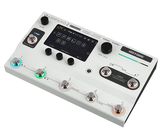
HoTone Stage Wow !
Brilliant product. I’ve been looking out for it since launched in October. It doesn’t disappoint. Build quality, user interface, and even better iOS control. No Android app yet but that may follow on
16
0
Report
Af
Great Potential, Not Quite There Yet
19.01.26 – Initial Feedback
Backstory
My journey into amp modelers began recently, driven by a desire for greater tonal versatility—especially for my American Stratocaster with single coils. My home setup consists of an Engl Fireball 25 (KT77) paired with a Victory 2x12 closed-back cabinet, which is an excellent match for my main use case: metal. My pedalboard is minimal, limited to a reverb.
However, a high-gain amp like the Fireball is not well suited for SRV-style Strat tones without adding multiple pedals and effects. I play exclusively at home, at moderate volume, through a real cabinet. Headphones or studio monitors were never an option—the feel of a real amp and cab is irreplaceable to me. At the same time, I wasn’t interested in buying additional amps or building a large pedalboard just to cover more ground tonally.
This led to a simple idea: using an amp modeler purely as a preamp into the effects loop return of my Fireball, bypassing its preamp and using it only as a power amp. While power amp coloration is often debated, for home use this felt largely irrelevant.
After weeks of research, I tried the Neural DSP Nano Cortex, purchased locally—but ultimately returned it. Despite overwhelming hype and positive reviews, the unit was a major disappointment. Before buying, I explained my exact use case to Neural support, who confirmed the Nano Cortex would be suitable, advising me to disable cab/IR simulation and use preamp captures (which I did, including global IR/CAB bypass).
Despite extensive tweaking, I couldn’t achieve a satisfactory tone. The unit was extremely noisy, and the captures suffered from resonant artifacts, excessive low-end boom, and general noise issues. Routing options were very limited, there was no effects loop, editing was restricted to a mobile app, and build quality was questionable—one knob came off within a week.
With high expectations unmet, the Nano Cortex went back. My next options narrowed down to the Line 6 HX Stomp and the Hotone Ampero II Stage.
Competition
The current modeler market is very competitive. While the HX Stomp is well supported and popular, it was released nearly a decade ago. Its small, old-school display and limited DSP ultimately put me off. In contrast, the Hotone Ampero II Stage appeared to hit a sweet spot, offering a strong feature set at a competitive price.
Some compare it to the Quad Cortex, but that comparison is unfair given the difference in price and scope. More realistic competitors are the Neural DSP Nano Cortex, Line 6 HX Stomp, Boss GX-100, IK Multimedia ToneX Pedal, and possibly the Kemper Profiler.
What made the Ampero II Stage stand out was its ability to split preamp and power amp sections, a usable touchscreen, flexible routing including four-cable method support, recently added capture support (for using shared captures), and a solid selection of amp/preamp models and effects. Below is my experience broken down by category. I’ll continue updating this review while deciding whether to keep or return the unit.
Build Quality & Aesthetics
The unit feels sturdy, built from thick metal with solid footswitches. All connections feel reliable with no wobble.
The white finish won’t appeal to everyone, but it doesn’t look cheap and gives a professional impression. The layout is well thought out, though additional color options would have been welcome.
Sound Quality
After my Nano Cortex experience, expectations were low—but the Ampero II Stage surprised me. Several factory presets are immediately usable for both high-gain and clean tones. Most importantly, my intended use case—running into the effects return of the Engl Fireball—worked very well.
Even running full amp models into the power amp sounded better than expected, but using preamp-only models improved things further. The dynamic response is close to a real amplifier, and for the naked ear, differences are negligible in a home setting.
Connectivity & Routing
Routing and connectivity are excellent. Four-cable method support, flexible signal chains, and amp blending options make this one of the unit’s strongest areas.
DSP
DSP is the main technical limitation. Using captures can consume up to 70% of available DSP, leaving room for only a few effects—often making it impossible to add reverb. That said, for typical use cases involving amp models with several pre- and post-effects, DSP is sufficient.
Capture functionality was added later, and the unit was clearly not designed with it in mind. Optimization is needed.
Captures
Access to NAM profiles is a big plus, offering thousands of options. However, Hotone’s native “Tone Catch” library is extremely limited. For example, searching for a JCM800 yields only two captures, compared to hundreds on Cortex Cloud.
User Interface
Both the onboard UI and desktop editor are excellent—intuitive, responsive, and well designed. On-screen chain editing, easy preset management, community downloads, and Bluetooth mobile app support are all very well executed.
Community & Support
This is where the product falls short. The forum shows users actively sharing feedback and asking questions, but responses from Hotone are nonexistent. The community is mostly Chinese-speaking, and official engagement is effectively zero.
Support is, bluntly, absent. Multiple attempts to report issues or provide feedback went unanswered. This stands in sharp contrast to Neural DSP, whose support team is responsive and helpful.
Development Cycle
Development is slow. Longstanding bugs remain unresolved, even as major features like captures are added. Priorities feel misaligned.
Conclusion
Overall, my experience with the Ampero II Stage has been largely positive. It sounds good, works well in a real-amp setup, and offers excellent usability and routing for its price. However, the lack of support and an almost nonexistent community significantly limit its long-term appeal. Software evolution and communication are critical for products like this; without them, even good hardware risks becoming obsolete. The unit is still within the return period, so testing continues, and I’ll share my final thoughts soon.
Backstory
My journey into amp modelers began recently, driven by a desire for greater tonal versatility—especially for my American Stratocaster with single coils. My home setup consists of an Engl Fireball 25 (KT77) paired with a Victory 2x12 closed-back cabinet, which is an excellent match for my main use case: metal. My pedalboard is minimal, limited to a reverb.
However, a high-gain amp like the Fireball is not well suited for SRV-style Strat tones without adding multiple pedals and effects. I play exclusively at home, at moderate volume, through a real cabinet. Headphones or studio monitors were never an option—the feel of a real amp and cab is irreplaceable to me. At the same time, I wasn’t interested in buying additional amps or building a large pedalboard just to cover more ground tonally.
This led to a simple idea: using an amp modeler purely as a preamp into the effects loop return of my Fireball, bypassing its preamp and using it only as a power amp. While power amp coloration is often debated, for home use this felt largely irrelevant.
After weeks of research, I tried the Neural DSP Nano Cortex, purchased locally—but ultimately returned it. Despite overwhelming hype and positive reviews, the unit was a major disappointment. Before buying, I explained my exact use case to Neural support, who confirmed the Nano Cortex would be suitable, advising me to disable cab/IR simulation and use preamp captures (which I did, including global IR/CAB bypass).
Despite extensive tweaking, I couldn’t achieve a satisfactory tone. The unit was extremely noisy, and the captures suffered from resonant artifacts, excessive low-end boom, and general noise issues. Routing options were very limited, there was no effects loop, editing was restricted to a mobile app, and build quality was questionable—one knob came off within a week.
With high expectations unmet, the Nano Cortex went back. My next options narrowed down to the Line 6 HX Stomp and the Hotone Ampero II Stage.
Competition
The current modeler market is very competitive. While the HX Stomp is well supported and popular, it was released nearly a decade ago. Its small, old-school display and limited DSP ultimately put me off. In contrast, the Hotone Ampero II Stage appeared to hit a sweet spot, offering a strong feature set at a competitive price.
Some compare it to the Quad Cortex, but that comparison is unfair given the difference in price and scope. More realistic competitors are the Neural DSP Nano Cortex, Line 6 HX Stomp, Boss GX-100, IK Multimedia ToneX Pedal, and possibly the Kemper Profiler.
What made the Ampero II Stage stand out was its ability to split preamp and power amp sections, a usable touchscreen, flexible routing including four-cable method support, recently added capture support (for using shared captures), and a solid selection of amp/preamp models and effects. Below is my experience broken down by category. I’ll continue updating this review while deciding whether to keep or return the unit.
Build Quality & Aesthetics
The unit feels sturdy, built from thick metal with solid footswitches. All connections feel reliable with no wobble.
The white finish won’t appeal to everyone, but it doesn’t look cheap and gives a professional impression. The layout is well thought out, though additional color options would have been welcome.
Sound Quality
After my Nano Cortex experience, expectations were low—but the Ampero II Stage surprised me. Several factory presets are immediately usable for both high-gain and clean tones. Most importantly, my intended use case—running into the effects return of the Engl Fireball—worked very well.
Even running full amp models into the power amp sounded better than expected, but using preamp-only models improved things further. The dynamic response is close to a real amplifier, and for the naked ear, differences are negligible in a home setting.
Connectivity & Routing
Routing and connectivity are excellent. Four-cable method support, flexible signal chains, and amp blending options make this one of the unit’s strongest areas.
DSP
DSP is the main technical limitation. Using captures can consume up to 70% of available DSP, leaving room for only a few effects—often making it impossible to add reverb. That said, for typical use cases involving amp models with several pre- and post-effects, DSP is sufficient.
Capture functionality was added later, and the unit was clearly not designed with it in mind. Optimization is needed.
Captures
Access to NAM profiles is a big plus, offering thousands of options. However, Hotone’s native “Tone Catch” library is extremely limited. For example, searching for a JCM800 yields only two captures, compared to hundreds on Cortex Cloud.
User Interface
Both the onboard UI and desktop editor are excellent—intuitive, responsive, and well designed. On-screen chain editing, easy preset management, community downloads, and Bluetooth mobile app support are all very well executed.
Community & Support
This is where the product falls short. The forum shows users actively sharing feedback and asking questions, but responses from Hotone are nonexistent. The community is mostly Chinese-speaking, and official engagement is effectively zero.
Support is, bluntly, absent. Multiple attempts to report issues or provide feedback went unanswered. This stands in sharp contrast to Neural DSP, whose support team is responsive and helpful.
Development Cycle
Development is slow. Longstanding bugs remain unresolved, even as major features like captures are added. Priorities feel misaligned.
Conclusion
Overall, my experience with the Ampero II Stage has been largely positive. It sounds good, works well in a real-amp setup, and offers excellent usability and routing for its price. However, the lack of support and an almost nonexistent community significantly limit its long-term appeal. Software evolution and communication are critical for products like this; without them, even good hardware risks becoming obsolete. The unit is still within the return period, so testing continues, and I’ll share my final thoughts soon.
12
0
Report
Ms
Amazing modeler & clarity
This product fully met my expectations, and I have no regrets about purchasing it. It is suitable for any type of music and will definitely meet your needs. As a metal musician, I found many amp and preamp modelers, as well as high-quality distorted amps, in the Ampero Stage. The best feature is the microphone adjustment when selecting the cabinet option, which makes a significant difference. I am pleased with the sound quality and clarity of this device.
11
0
Report
G
Great product
The only thing I am not happy with is midi documentation!
Missing loads of key data necessary if you want to control changes , etc from a DAW you need to guess the numbers
Missing loads of key data necessary if you want to control changes , etc from a DAW you need to guess the numbers
12
2
Report
G
Powerful Multi-Effect Pedal with Great Sound, but a Few Caveats
The Hotone Ampero II Stage is a very capable multi-effect unit for electric guitar, and overall I’m quite pleased with it.
The sound quality is excellent — the amp sims, effects, and signal chain are all very musical, rich, and usable in both rehearsal and live situations. Whether you’re chasing clean tones, drive, or ambient textures, it holds up really well.
One of the things I like most is the touchscreen. It’s clear, responsive, and makes navigating presets and parameters far more intuitive than scrolling through endless buttons. There’s a huge range of functions and effects available, and putting together tones is genuinely fun rather than a chore.
Using the unit feels satisfying — everything from tone shaping to preset management is smooth, and you can tell it’s been designed with practical use in mind.
That said, there are a couple of caveats:
For a Chinese brand, the price is on the higher side. It’s competitive with some well-established processors from more premium makers, and I understand why some players hesitate because of that.
I’ve also noticed significant heat buildup during use. The unit gets fairly warm, especially after longer playing sessions. It feels like the internal processor is working hard to keep up with everything loaded into it, and I sometimes wonder if that’s a sign the hardware is a bit under-spec’d for the ambitious feature set.
Overall, if you’re after a versatile, great-sounding all-in-one that’s enjoyable to use, the Ampero II Stage delivers a lot — you just have to be okay with the price point and the warmth it runs at during operation.
The sound quality is excellent — the amp sims, effects, and signal chain are all very musical, rich, and usable in both rehearsal and live situations. Whether you’re chasing clean tones, drive, or ambient textures, it holds up really well.
One of the things I like most is the touchscreen. It’s clear, responsive, and makes navigating presets and parameters far more intuitive than scrolling through endless buttons. There’s a huge range of functions and effects available, and putting together tones is genuinely fun rather than a chore.
Using the unit feels satisfying — everything from tone shaping to preset management is smooth, and you can tell it’s been designed with practical use in mind.
That said, there are a couple of caveats:
For a Chinese brand, the price is on the higher side. It’s competitive with some well-established processors from more premium makers, and I understand why some players hesitate because of that.
I’ve also noticed significant heat buildup during use. The unit gets fairly warm, especially after longer playing sessions. It feels like the internal processor is working hard to keep up with everything loaded into it, and I sometimes wonder if that’s a sign the hardware is a bit under-spec’d for the ambitious feature set.
Overall, if you’re after a versatile, great-sounding all-in-one that’s enjoyable to use, the Ampero II Stage delivers a lot — you just have to be okay with the price point and the warmth it runs at during operation.
1
0
Report
MG
The new star of the guitar world
Thank you Thomann for the fast shipping.
The sound quality is much higher than I expected.
You can capture analog tones. Drive and effects are very lively and warm.
For those who want to buy multi effect, it is preferred due to its price, performance and functionality. Youtube birçok inceleme videosu inceledim ve sonunda hotone karar verdim. Bu kararımın doğru olduğunu evde test edince gördüm. Tek bir aletle her tarzda iş yapabilirsiniz. Her gitariste bir tane Ampero alması gerekiyor.
The sound quality is much higher than I expected.
You can capture analog tones. Drive and effects are very lively and warm.
For those who want to buy multi effect, it is preferred due to its price, performance and functionality. Youtube birçok inceleme videosu inceledim ve sonunda hotone karar verdim. Bu kararımın doğru olduğunu evde test edince gördüm. Tek bir aletle her tarzda iş yapabilirsiniz. Her gitariste bir tane Ampero alması gerekiyor.
2
0
Report
s
Enjoy this modeller so far
Pros: Sounds great. Hi class UI/UX. Small footprint. Low power consumption
Cons: If pitch shifting is a must - go search elsewhere.
Cons: If pitch shifting is a must - go search elsewhere.
5
0
Report
M
Excellent build quality and great sound! The tone capture works perfectly and is on par with Tonex in terms of sound. An excellent processor for its price!
4
1
Report
M
HoTone Ampero II Stage upstages everything else!
This is an unbelievable pedal!
I have recently added the HoTone Ampero II Stage to my pedal board. Playing a Taylor T5 first into the Ampero II Stage, then from there into a BOSS Compressor, BOSS OC-5 Octave, an old BOSS Tremelo, and then into a Strymon Big Sky (soon to be replaced with a Strymon Big Sky Mx - also from Thomann!), and out through a BSS Audio AR-133 active DI to my DAW or mixer (depending on what I'm doing).
The sounds I now can get out of the guitar are utterly insane! I'm in a very happy space!
I have recently added the HoTone Ampero II Stage to my pedal board. Playing a Taylor T5 first into the Ampero II Stage, then from there into a BOSS Compressor, BOSS OC-5 Octave, an old BOSS Tremelo, and then into a Strymon Big Sky (soon to be replaced with a Strymon Big Sky Mx - also from Thomann!), and out through a BSS Audio AR-133 active DI to my DAW or mixer (depending on what I'm doing).
The sounds I now can get out of the guitar are utterly insane! I'm in a very happy space!
0
0
Report
V
This is a great device for the price! It sounds great, is reasonably compact, has flexible controls, and has a beautiful design with a wealth of functionality. I quickly figured out the controls; they're quite intuitive. I'd previously used the Line 6 HD500X for a long time, and this Hotone Ampero II Stage didn't disappoint! I'm very pleased! I highly recommend it!
1
0
Report