


Universal Audio 4-710D Twin-Finity

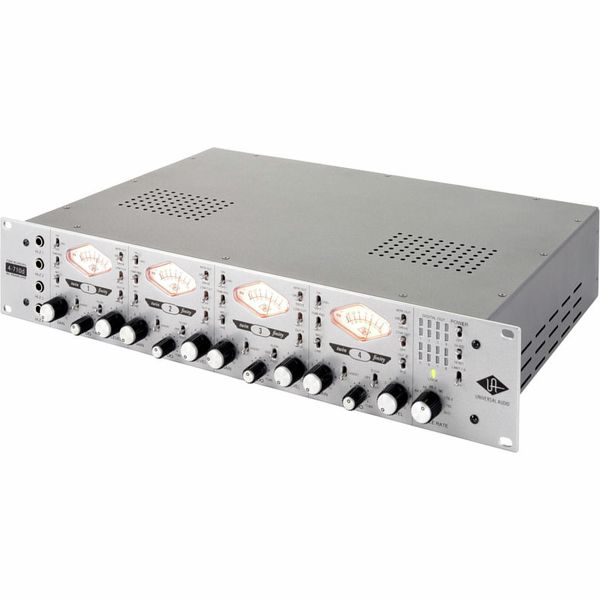
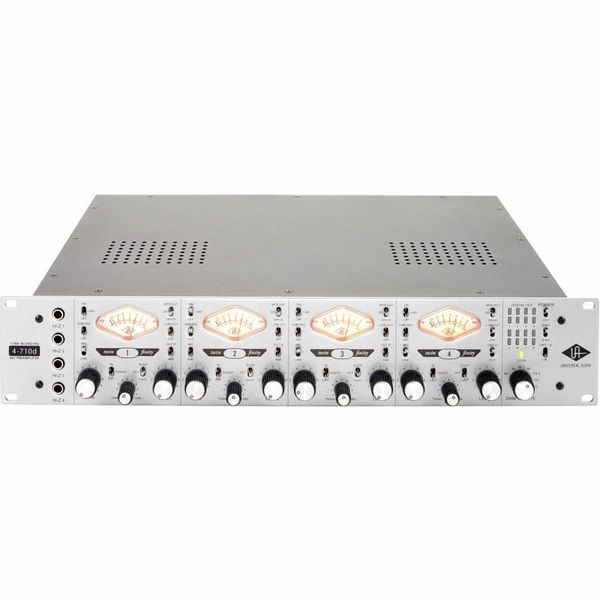
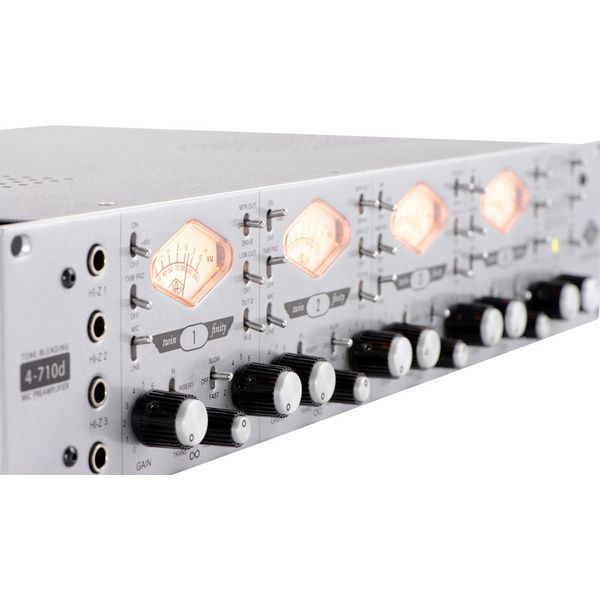


4-Channel Preamplifier
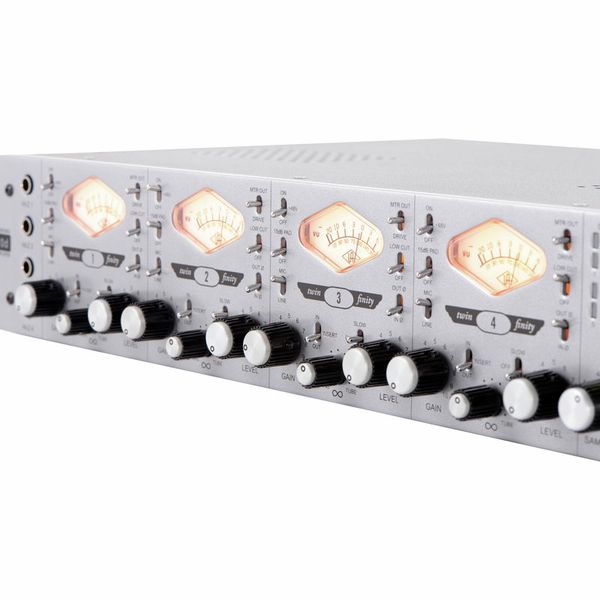
- 4-Channel tone-blending microphone/line preamplifier
- With classic compression in 1176-style per channel
- Two signal paths: 285 V Class-A tube preamplifier and solid state transconductance amplifier
- Phase-locked crossfading between the tube and solid state level
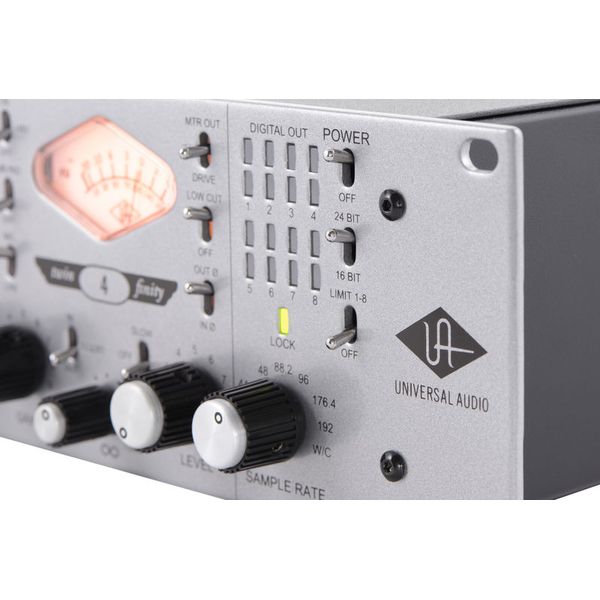
- 24-bit AD conversion
- Sample rates of up to 192 kHz
- Switchable phantom power 48V per channel
- Frequency range: 20 Hz - 100 kHz +/- 0.2 dBu, max. gain +70 dBu
- Design: 19"/ 2 HU
Connections:
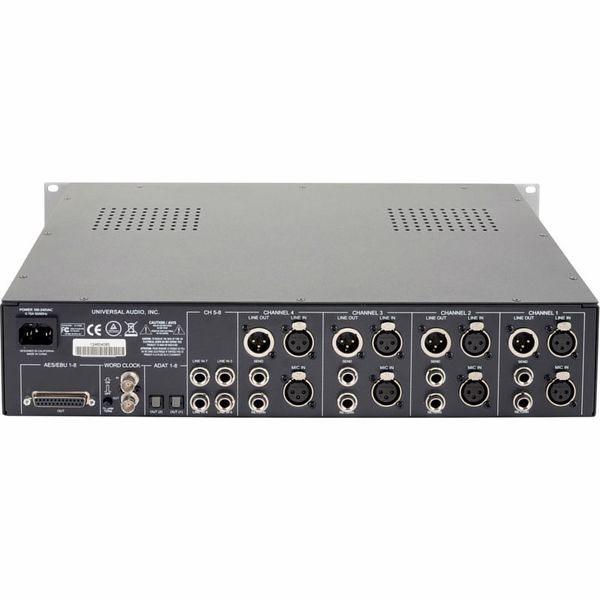
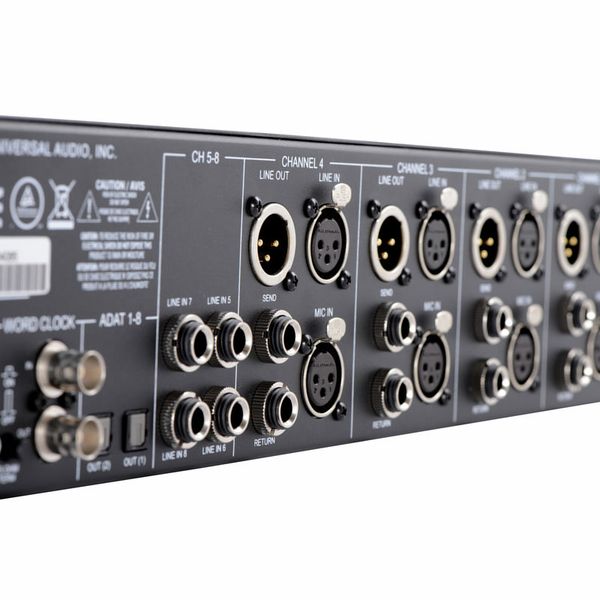
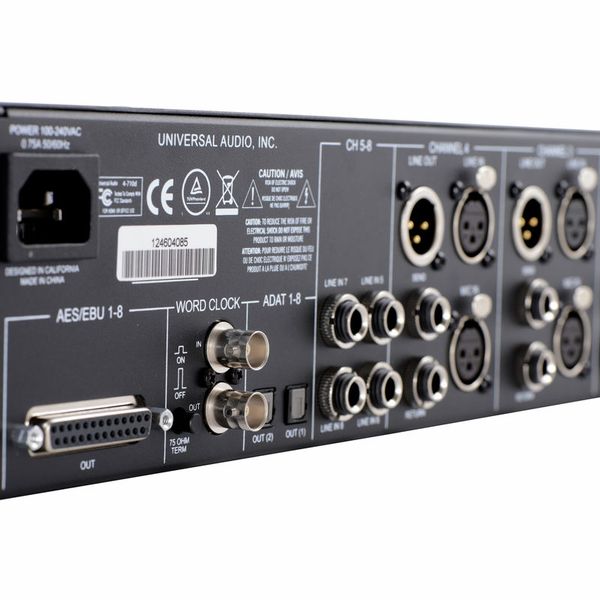
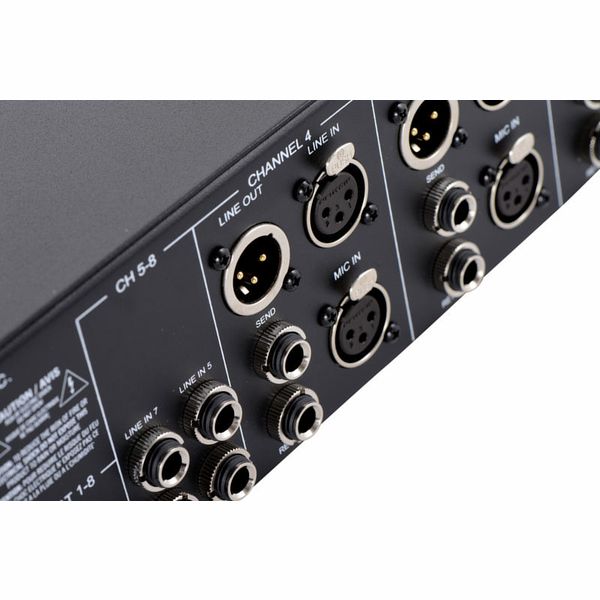
- 4x Mic input XLR
- 4x Line input XLR
- 4x Line input jack
- 4x Hi-Z input
- 4x Send/Return (1x per mic-channel)
- 4x Line-out XLR, ADAT and AES/EBU connectors
- Wordclock I/O on BNC
-
Available since November 2010
-
Item number 256801
-
Sales Unit 1 piece(s)
-
Channels 4
-
Number of microphone inputs 4
-
Instrument input Yes
-
Tubes Yes
-
Compressor/Limiter Yes
-
Equalizer No
-
De-Esser No
-
Phantom power Yes
-
Phase Reverse Yes
-
External effect loops Yes
-
Analogue Outputs XLR
-
Digitale Outputs ADAT, AES
-
Headphone connection No
-
Level Meter Yes
-
Design 19" / 2U
Four-channel Twin-Finity preamp
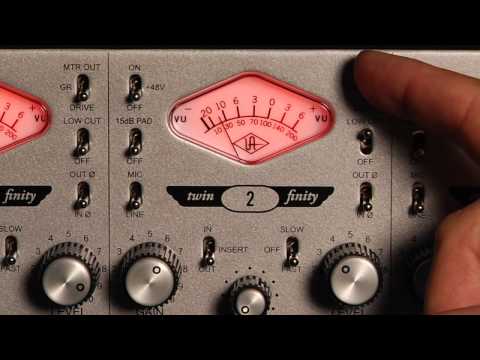
The Universal Audio 4-710D is the four-channel version of the company's 710 Twin-Finity microphone preamplifier – a design that allows continuous blending between a Class-A transistor circuit and a parallel Class-A tube circuit, covering an unusually wide tonal range from a single unit. Each channel includes an onboard compressor inspired by the classic Urei 1176, internal AD conversion at up to 24-bit/192kHz, and up to 70dB of gain. Four illuminated VU meters can be switched between output level, compressor gain reduction, and preamp drive, providing detailed visual feedback during tracking sessions. Considering the quality of its components and versatility, the 4-710D represents strong value for studios looking to expand an existing professional recording setup.
)
Connectivity and conversion
The Universal Audio 4-710D's internal AD conversion connects to an audio interface via dual ADAT or AES/EBU on a DB-25 port – covering both optical and professional digital formats without an external converter. Four additional analogue line inputs extend the unit's role beyond its own preamps: External preamplifiers can feed directly into the 4-710D's converters, making it a conversion hub for existing outboard gear while also serving as a standalone tracking front end. A globally switchable limiter section protects against digital clipping across all four channels simultaneously. Each channel also carries analogue line outputs and balanced send/return insert points for outboard effects – keeping the analogue signal path intact before conversion. The combination of these features takes the 4-710D well beyond the functional scope of a straightforward preamp module.
)
Flexible and professional
The 4-710D is aimed at professional recording engineers, established project studios, and serious home studio operators who need both premium microphone preamps and high-quality AD conversion in a single 2U rack unit. Its combination of analogue flexibility and extensive digital connectivity also makes it a practical choice for mobile recording rigs and live broadcast applications where rack space and signal path simplicity matter. Combining four Twin-Finity preamps, integrated conversion, and flexible analogue routing, the Universal Audio 4-710D offers an exceptionally versatile front end while remaining a comparatively accessible way to expand a professionally equipped studio.
)
About Universal Audio
Few manufacturers can draw upon a wealth of audio engineering experience comparable to that of Universal Audio. The company's founding father Bill Putnam, along with his friend Les Paul, have an admirable reputation as trend-setting music producers and developers of legendary analogue studio technology. Putnam recorded Chuck Berry, Muddy Waters, and Sarah Vaughan, and was Duke Ellington's favourite sound engineer. He developed the famous 1176 Peak Limiter and distributed the Teletronix LA-2A level amplifier. This earned him a posthumous "Technical Grammy Award" in 2000. In 1999, Putnam's sons, Bill Putnam Jr. and James Putnam, re-founded Universal Audio, transferring their father's analogue vision and craftsmanship to the digital music world. Their product range includes audio interfaces, dedicated DSP farms, and a variety of plugins, as well as analogue hardware devices.
One unit, many sources
With up to 70dB of gain and the Twin-Finity blend control, the Universal Audio 4-710D adapts to a wide range of microphones and sources, from ribbon microphones requiring clean, high-gain amplification at the transistor end of the blend to dynamic sources that benefit from the tube circuit's warmth and even-order harmonic content. The contrast between the two circuit characters becomes most apparent as the preamps are driven into saturation, where the Twin-Finity blend control becomes a powerful sound-shaping tool across microphone, line, and instrument inputs alike. The onboard compressors follow the 1176 model's approach: Gain reduction is controlled by balancing input and output levels rather than a dedicated ratio control, with two fixed attack/release timing options and a true bypass when compression is not required.
)
