


Shure WL184M Black

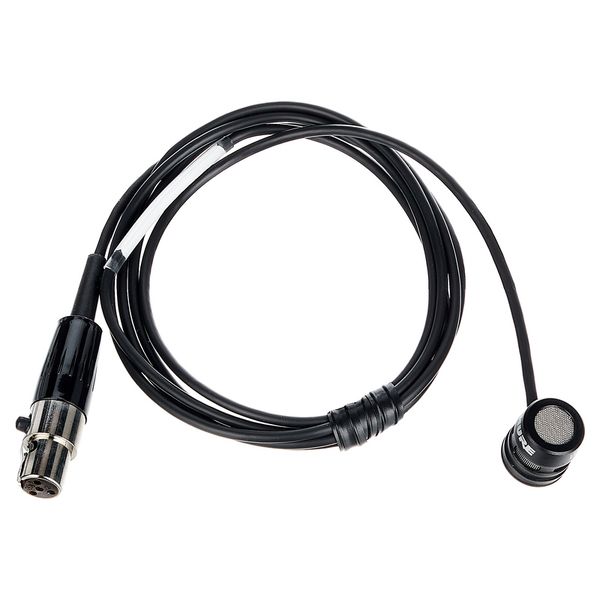
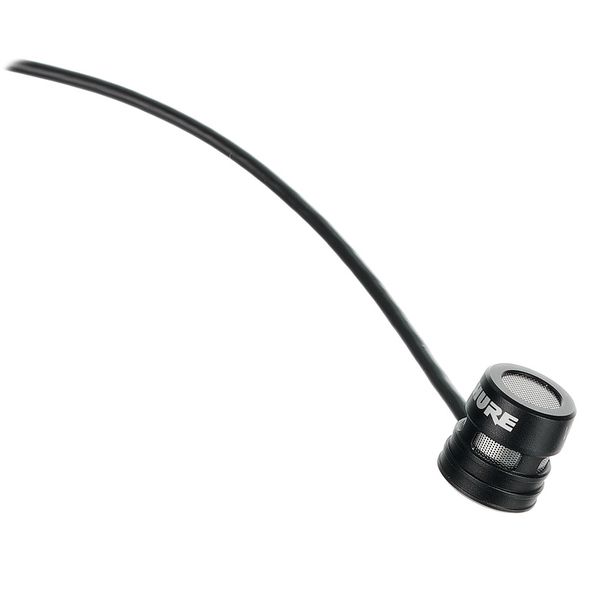


Professional Lavalier Microhphone
- Polar pattern: Supercardioid
- Frequency response: 70 Hz – 20,000 Hz
- Max SPL: 140.5 dB
- Sensitivity: -43.0 dBV / 1dBu / 94 dBu
- Dynamic range: 120.5 dB
- 8 mm shorter than the original WL18X series
- Cable length: 1.23 m
- Cable diameter: 2.2 mm
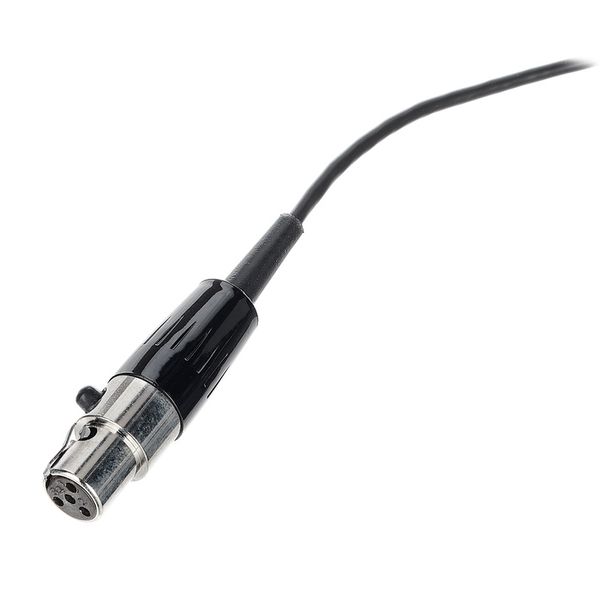
- TQG plug
- Dimensions: 13.6 x 12.7 mm
- Weight: 20 g
- Colour: Black
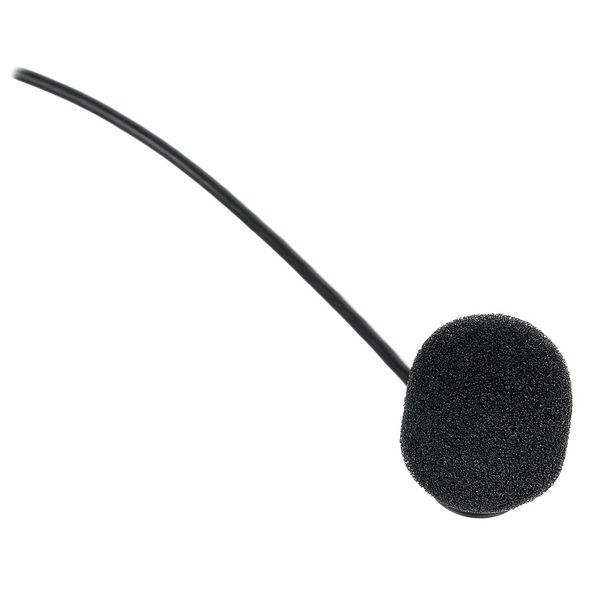
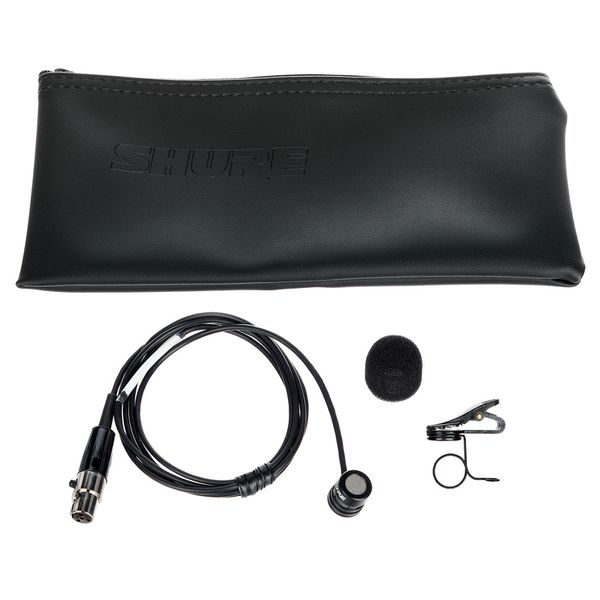
- Includes tie clip and foam windscreen
-
Available since June 2024
-
Item number 593994
-
Sales Unit 1 piece(s)
-
Colour Black
-
Polar Pattern super cardioid
-
Connector 4-pol. Shure
-
Capsule Type Condenser
-
Incl. Phantom Adaptor No
-
Frequency range from 70 Hz
-
Frequency range to 20000
-
Cable Length 123 mm
-
Diameter 13 mm
-
Length 14 mm
-
Weight 20 g
-
Wire Yes
-
Foam Windshield Yes
-
Clamp Yes
-
Bag Yes
-
Flexible supercardioid lavalier
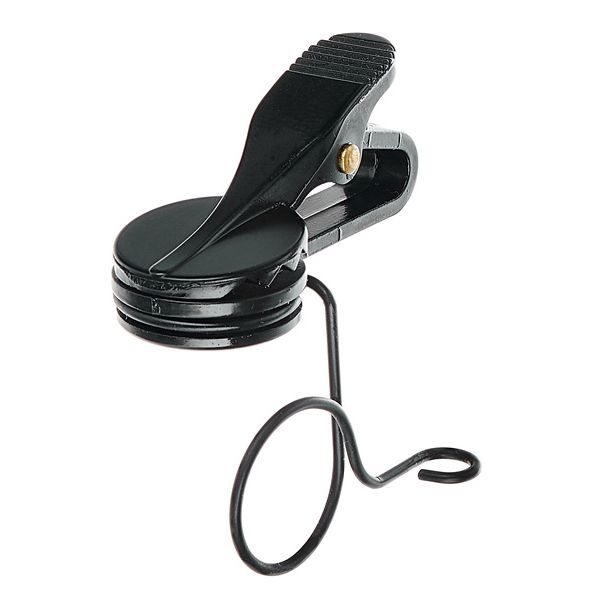
Part of the WL18XM series – Shure's newest professional lavalier line – the WL184M is the supercardioid model: Alongside the omnidirectional and cardioid variants, all are available in black or white and fitted with either TA4F or LEMO connectors. The series represents a significant evolution from its predecessor: 8mm shorter, with a more pronounced presence lift, a wider dynamic range, and lower self-noise. The supercardioid capsule has a near-linear frequency response, capturing the voice directly in front of it with precision and strong off-axis rejection, making it particularly well suited to speech reinforcement in louder or more complex acoustic environments. The rotating lapel clip, adjustable in 90° steps, attaches to any clothing or costume and allows the capsule to be aimed at the speaker regardless of mounting angle.

)
Dynamic by design
The WL184M's 70Hz-20kHz frequency response captures detailed mids and highs, while rolling off sub-bass rumble and clothing-rub thump before they reach the signal. Its 144dB max SPL leaves headroom for even the loudest nearby sources – well beyond any vocal application – while a 121dB dynamic range and 23dB SPL self-noise comfortably meet professional broadcast and live performance specifications, letting a whispered aside and a projected line sit on the same track without noise floor or clipping. The focused supercardioid pattern makes it a natural choice for multi-mic setups where crosstalk and spill between adjacent sources need to be minimised. Physically, the capsule runs on a 5V DC bias and its 1.23m cable terminates in a four-pin TA4F connector for compatible Shure bodypack transmitters (sold separately). At just 20g, the whole package sits unnoticed on a lapel.
)
By pros, for pros
The WL184M is aimed at audio professionals working in broadcast, theatre, and live production – anyone who needs a discreet, reliable lavalier that delivers precise, focused capture in demanding acoustic environments. Its supercardioid pattern provides strong off-axis rejection, reducing background noise and feedback susceptibility compared to an omni – making it the preferred choice where multiple microphones are open simultaneously, or where stage monitoring levels make an omni impractical. The trade-off, inherent to any supercardioid, is greater sensitivity to placement and speaker movement – the capsule needs to be aimed carefully and consistently for best results, which is why the WL18XM line also offers omnidirectional and cardioid variants for more flexible or forgiving applications.
)
About Shure
The American company Shure began developing microphones during the early 1930s and is one of the pioneers of the audio engineering sector. Models such as the 55 Unidyne – known to many as the "Elvis microphone" – and the SM57 and SM58 which appeared in the mid-1960s are still ubiquitous in live sound production today. They enjoy cult status among musicians and technicians alike. In the 1990s, Shure introduced the first wireless microphones and in-ear monitoring systems and became a market leader in this field. In addition to microphones, Shure offers a wide range of earphones and headphones for studio and live use, as well as various accessories.
Put on a real performance
For actors, presenters, moderators, and anyone else working with their voice, the WL184M's precise, focused reproduction rewards careful placement, with the capsule angled consistently towards the sound source for optimal results. For traditional presentations, roundtables, and conferences, the clip attaches to a collar or lapel and rotates towards the performer's face; in live performance, film, and broadcast, it disappears under the wardrobe of actors and presenters, while the 70Hz roll-off works as a natural high-pass against costume rub and set rumble, keeping dialogue audible. The snap-fit foam windscreen and zippered storage bag complete a package that is as practical in the field as it is reliable on stage.