


Lf
Good quality but not much tape
The quality is pretty great, the adhesive is a good balance between stickiness and ability to work with, it is easy to cut with scissors or craft knives and it stays in position very well.
The only downside is that it is quite little tape. For Telecaster body cavities + pickgruard I needed roughly 1.5 rolls, for a Stratocaster + pickguard 1.5 rolls were not enough, I'd probably need about half to 1 roll extra to cover the entirety.
The only downside is that it is quite little tape. For Telecaster body cavities + pickgruard I needed roughly 1.5 rolls, for a Stratocaster + pickguard 1.5 rolls were not enough, I'd probably need about half to 1 roll extra to cover the entirety.
3
2
Report
T
Works great, very small rolls though
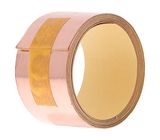
Many of the reviews complain about the size of the rolls. Yes, they are definitely a lot smaller than they look in the photos. I think Thomann should do something about this misleading marketing. Because of this I only give 4 stars.
Having said that, these Harley Benton rolls of copper foil are less than half the price of the Allparts strips of copper foil that you can also buy from Thomann. And they both give you EXACTLY the same length/width of copper foil. Which means that these Harley Benton rolls are obviously much better value, even though the rolls are a lot smaller than they look in the photos.
Personally I also find the Harley Benton copper foil easier to work with. The Allparts strips are slightly thicker/stiffer, which makes it more difficult to make them stick to the surface of the pickup/control cavities, and also easier to cut your fingers on the foil. On the negative side, the Harley Benton foil is thinner and more fragile, which means it must be handled more carefully to avoid tearing it.
While this product itself is fine, you will need at least two rolls to properly shield a guitar. I think the product description should be more clear on this. Maybe you will even three rolls, depending on the guitar and on your level of experience. If this is the first time you shield a guitar, you will probably make some mistakes and waste a bit of foil.
A couple of tips:
-Make sure the cavities are CLEAN before you start. If there's dust or sawdust inside the cavities, the foil won't stick to the walls.
-Make sure that all of the shielding (all cavities AND pickguard) is properly grounded. If not, the shielding can actually work as an antenna for noise and increase your noise levels. This often means you will need to run a ground wire to the shielding.
-Make sure that none of the shielding is in contact with any HOT wires/terminals, especially around the jack socket which can be a tight spot in many types of guitars. Any contact between the shielding and the HOT signal = no sound.
-Be careful with those razor sharp edges of the copper foil. It's very easy to cut your fingertips, and fingertips tend to bleed a LOT, even from small cuts.
Having said that, these Harley Benton rolls of copper foil are less than half the price of the Allparts strips of copper foil that you can also buy from Thomann. And they both give you EXACTLY the same length/width of copper foil. Which means that these Harley Benton rolls are obviously much better value, even though the rolls are a lot smaller than they look in the photos.
Personally I also find the Harley Benton copper foil easier to work with. The Allparts strips are slightly thicker/stiffer, which makes it more difficult to make them stick to the surface of the pickup/control cavities, and also easier to cut your fingers on the foil. On the negative side, the Harley Benton foil is thinner and more fragile, which means it must be handled more carefully to avoid tearing it.
While this product itself is fine, you will need at least two rolls to properly shield a guitar. I think the product description should be more clear on this. Maybe you will even three rolls, depending on the guitar and on your level of experience. If this is the first time you shield a guitar, you will probably make some mistakes and waste a bit of foil.
A couple of tips:
-Make sure the cavities are CLEAN before you start. If there's dust or sawdust inside the cavities, the foil won't stick to the walls.
-Make sure that all of the shielding (all cavities AND pickguard) is properly grounded. If not, the shielding can actually work as an antenna for noise and increase your noise levels. This often means you will need to run a ground wire to the shielding.
-Make sure that none of the shielding is in contact with any HOT wires/terminals, especially around the jack socket which can be a tight spot in many types of guitars. Any contact between the shielding and the HOT signal = no sound.
-Be careful with those razor sharp edges of the copper foil. It's very easy to cut your fingertips, and fingertips tend to bleed a LOT, even from small cuts.
1
0
Report
d
Correspond à la description
Petit rouleau en effet mais c'est précisé dans la description du produit.
Avec un seul rouleau j'ai pu faire mon pickguard et la plaque arrière du tremolo, et il m'en reste encore. Impossible de faire les cavités avec cependant mais ce n'est pas mon objectif, mes cavités ayant été peintes à la peinture métalique. La couche de cuivre est selon moi un peu trop importante pour l'appliquer dans les cavités facilement (pas assez maléable). Mais sur du plat, c'est tout bon.
Avec un seul rouleau j'ai pu faire mon pickguard et la plaque arrière du tremolo, et il m'en reste encore. Impossible de faire les cavités avec cependant mais ce n'est pas mon objectif, mes cavités ayant été peintes à la peinture métalique. La couche de cuivre est selon moi un peu trop importante pour l'appliquer dans les cavités facilement (pas assez maléable). Mais sur du plat, c'est tout bon.
0
0
Report
g
Easy to apply, stays attached
0
0
Report
L
ok but take conductive paint into consideration
it conducts very well but in some circumstances it is best and/or easier to use conductive graphite paint.
the adhesive is a bit weak and the surfaces must be dust free and well smoothed.
the latter might have higher resistance if not properly applied though.
the adhesive is a bit weak and the surfaces must be dust free and well smoothed.
the latter might have higher resistance if not properly applied though.
0
0
Report
X
thick shielding tape
This is a thick, high-quality shielding tape. The thickness helps a lot as it makes the tape quite stiff, it won't roll back on you as you remove the backing. The only problem is that the roll is quite short, not quite enough for a Precision-style bass's cavity.
Highly recommended, just keep in mind you might need more than one roll.
Highly recommended, just keep in mind you might need more than one roll.
0
0
Report
c
As other reviewers noted, it's just a small roll. Should you wonder how much to order, it might be useful to know that two rolls was *just* enough to cover the cavity (but not the pickguard) of my Jazzmaster. Three rolls wouldn't hurt if you want some to spare.
0
0
Report
A
Nice but you need more than one
You need too as was my case with my strat a righty switched to a lefty and took me 2 rolls for being able to create that faraday cage.
0
0
Report
A
Get two or three
Needed 2.5 to do my telecaster
0
0
Report
T
Works Well reels are small
Check the dimensions pic makes them look Gaff tape size but think smallest roll of cellotape .
That said works well and easy to fit.
That said works well and easy to fit.
1
1
Report