


Arturia AstroLab 37



One month of full access to Syntorial for free – learn synth programming like a video game
When you purchase this product between 15.07.2026 and 15.10.2026, you receive a free 30-day full trial of Syntorial, the interactive ear-training software for synth programming.
Instead of just watching videos, you recreate leads, basses, pads and more. Get instant feedback as you learn how oscillators, filters, modulation and effects work together to create real patches.
Your personal voucher code will be sent automatically by e-mail after your order. No credit card required. The trial ends automatically after expiry.
This offer is available in English, French, Spanish, and Japanese.
Synthesizer
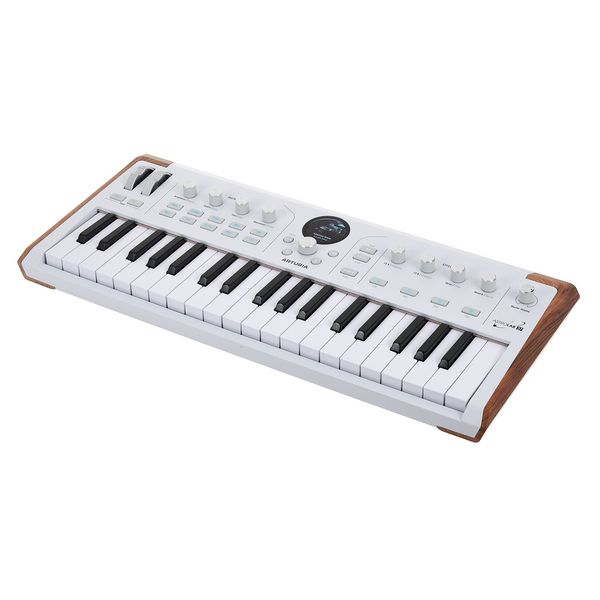
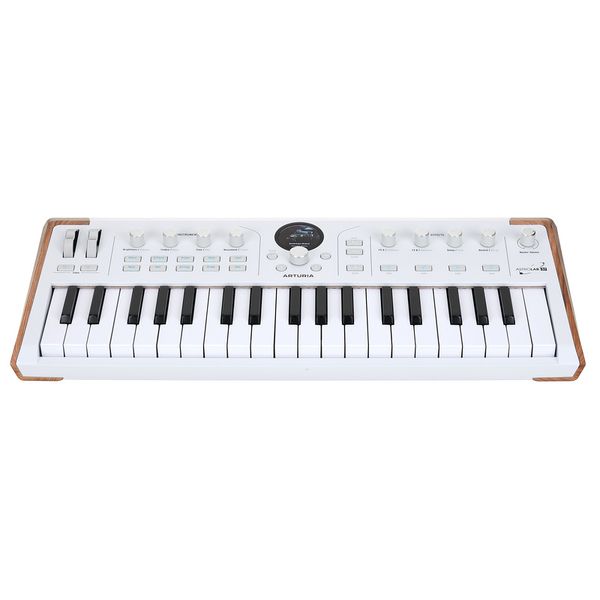
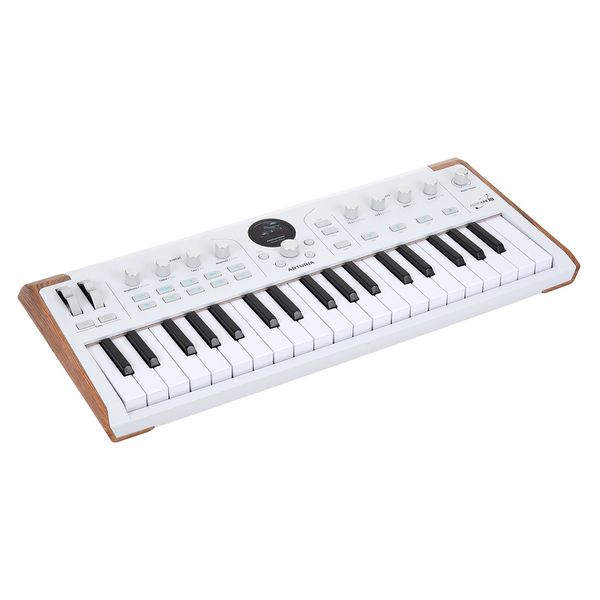
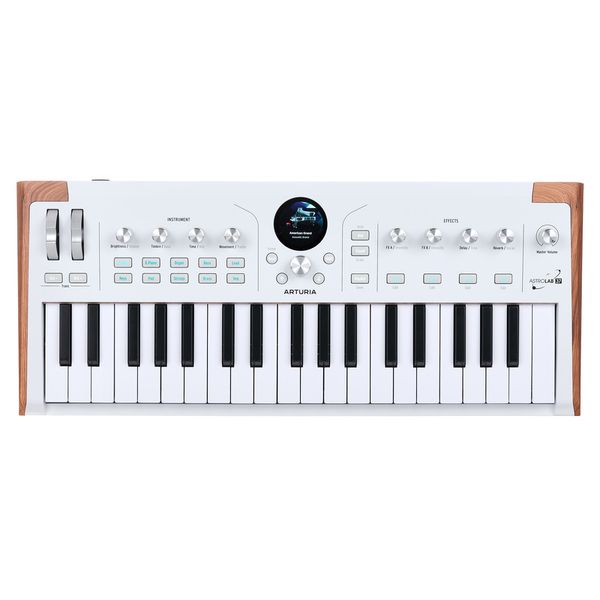
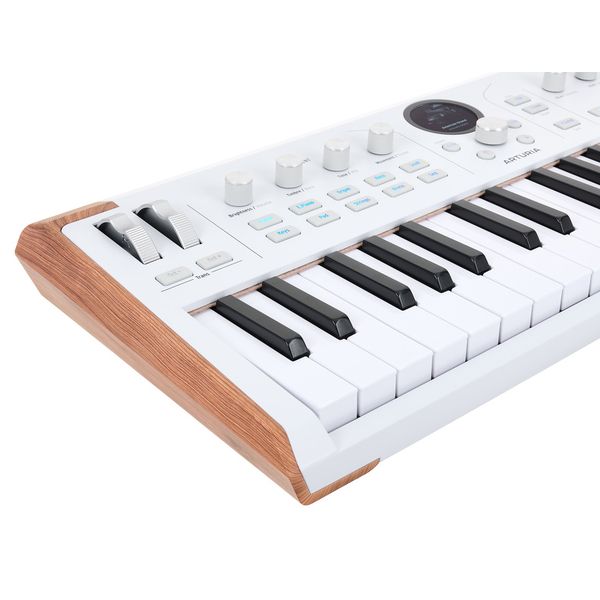
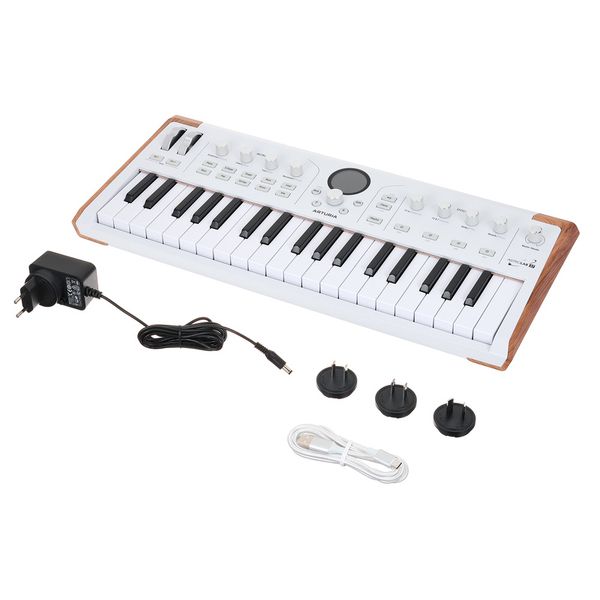
- Keyboard with 37 velocity-sensitive slim keys with aftertouch
- Suitable for studio, stage and mobile setups
- 40+ built-in instruments, including Minimoog, Wurlitzer, B-3 and piano emulations
- 11 sound engines: Virtual Analog, Samples, Wavetable, FM, Granular, Physical Modelling, Vector Synthesis, Harmonic, Phase Distortion, Vocoder, Karplus Synthesis
- 1800 integrated sounds, expandable to up to 10,000 via Arturia software
- Arpeggiator, chord and scale modes
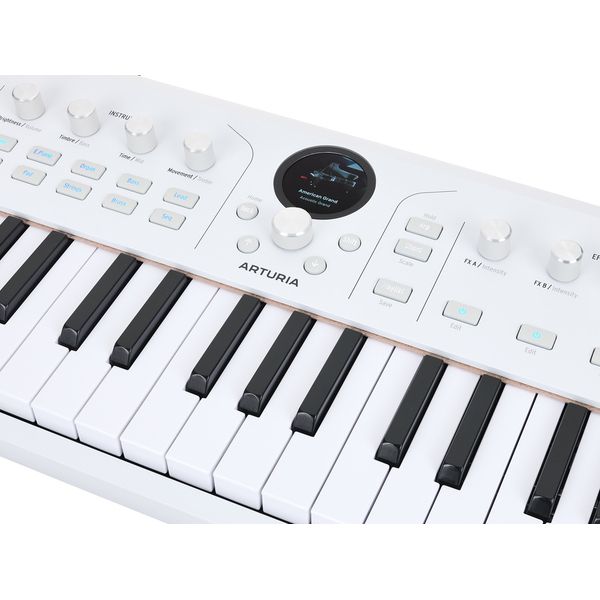
- Colour display with navigation wheel
- Ten preset buttons
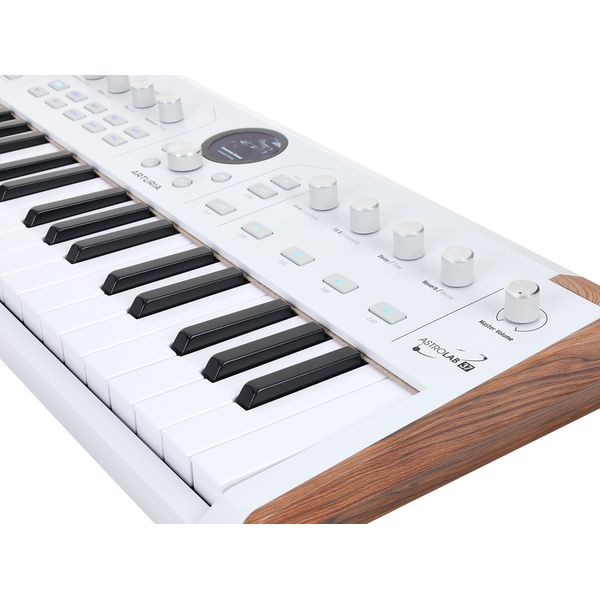
- Four macro and four FX encoders, including delay/reverb
- 12 insert-FXs
- Split function
- Bluetooth audio and WiFi
- Pitch bend and modulation wheel
- Software (Download): AstroLab Connect, Analog Lab Pro
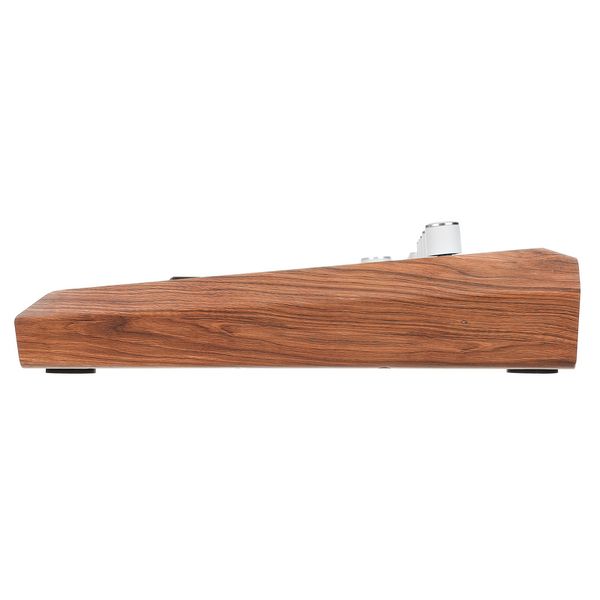
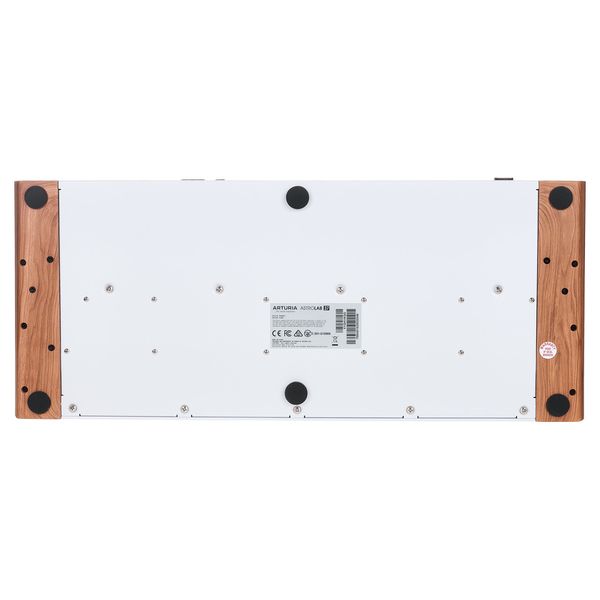
- Dimensions (W × H × D): 515 × 49 × 214 mm
- Weight: 1.95 kg
- Includes power supply and USB cable (C/A)
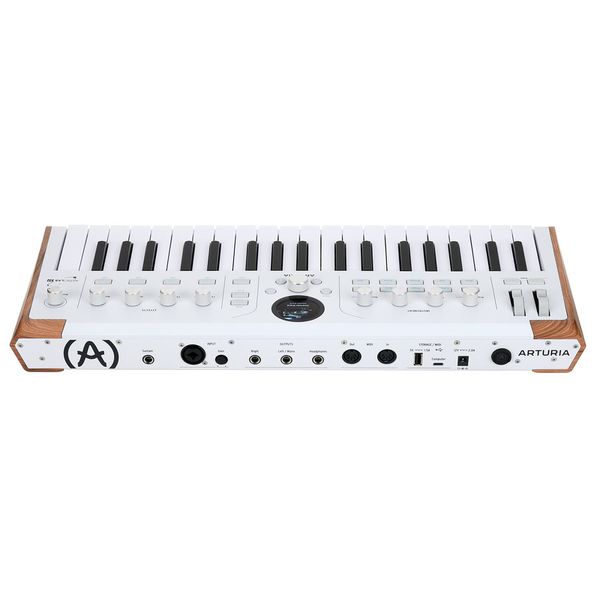
Connectors:
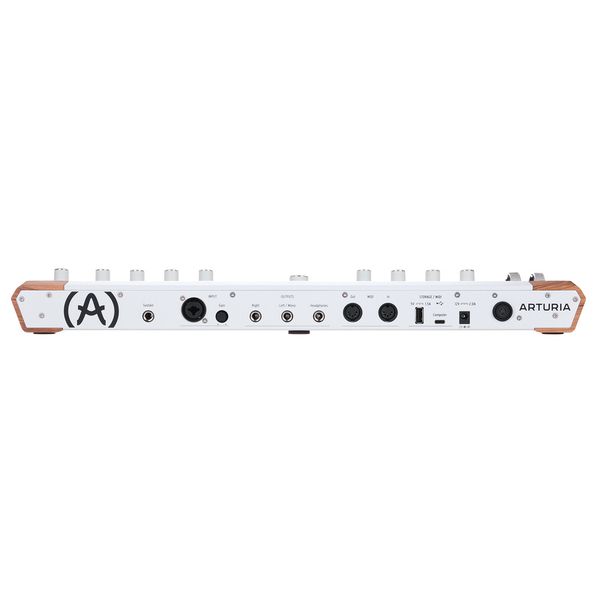
- Microphone input: Combined socket with XLR/6.3 mm jack
- Two line outputs: 6.3 mm jack
- Headphone output: 6.3 mm jack
- MIDI In/Out: 5-pin DIN
- Sustain pedal input: 6.3 mm jack
- USB-A (host)
- USB-C
- Power supply connection
-
Available since December 2025
-
Item number 629233
-
Sales Unit 1 piece(s)
-
Number Of Keys 37
-
Touch-Sensitive Yes
-
Aftertouch Yes
-
Split Zones Yes
-
Modulation Wheel Yes
-
Number of simultaneous Voices 48
-
Sound Engine Digital
-
MIDI interface 1x In, 1x Out
-
Storage Medium Internal
-
USB-port Yes
-
Effects Yes
-
Arpeggiator Yes
-
Number of Analog Outputs 3
-
Digital Output Yes
-
Display Yes
-
Amount Of Keys 37
-
Touch Sensitive Yes
-
Number of Voices 48
-
Sampler Yes
-
Pedal Connections Yes
-
Number of analog outputs 3
-
Pedal Connectors Yes
-
Dimensions 515 x 49 x 214mm
-
Optional Expansion Boards n/a
-
Weight 2,0 kg
-
Dimensions in mm 515 x 49 x 214mm
-
Weight in kg 2,0 kg
-


A compact world of classic synths
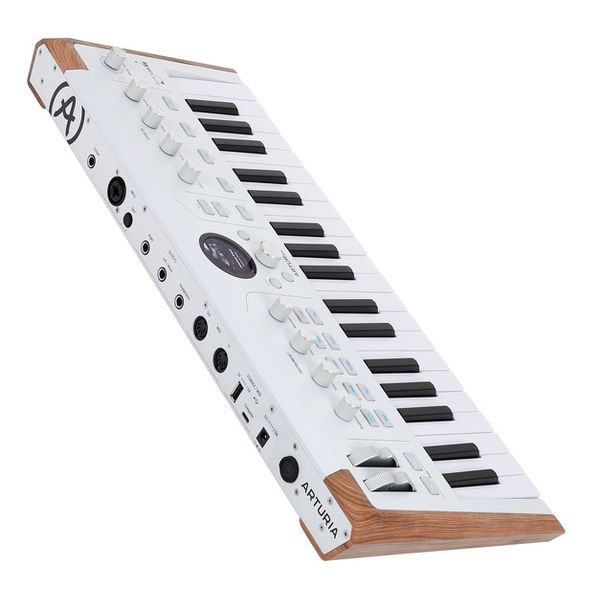
The AstroLab 37 brings Arturia's extensive V Collection of classic software instruments into a compact, dedicated stage-ready keyboard. Fully standalone, it runs a local version of Analog Lab – Arturia's premium performance-oriented software – placing over 44 premium modelled instrument engines at the player's fingertips without requiring a computer. Its 37-note semi-weighted keybed with aftertouch, modulation and pitch-bend wheels, and performance-focused controls underline its emphasis on expressive, real-time playing in a streamlined format. Like its larger counterparts, AstroLab 37 remains closely tied to Arturia's software ecosystem: Sounds can be developed in depth within Analog Lab or the V Collection and transferred directly to the hardware, where they operate as a cohesive, self-contained instrument ready for stage or studio use – all in a space-conscious format that travels easily and fits anywhere.

)
Performance architecture and sound control
Despite its compact footprint, AstroLab 37 retains the core performance architecture of the larger models. It is bi-timbral, organising sounds into Single or dual-layer Presets that can be split or layered across the keyboard with independent levels and transposition. A central rotary encoder enables fast preset navigation beneath the central display, supported by dedicated transport and performance buttons. Eight assignable rotary knobs provide hands-on access to instrument macros – such as modulation, brightness, and timbre – as well as effects including inserts, delay, reverb, and EQ. An onboard arpeggiator, chord, and scale modes complete the performance toolkit, extending creative control well beyond static presets while maintaining a streamlined, stage-focused workflow.
)
Built for mobile and hybrid setups
AstroLab 37 is designed for musicians who need a professional-grade sound source in a compact, easy-to-transport format. Live electronic performers, producers moving between studio and rehearsal spaces, and touring keyboardists with streamlined, volume-conscious rigs will appreciate its portability, fast setup, and expansive sonic range. While its 37-note keybed naturally favours leads, basses, and synth textures, its MIDI implementation allows a second keyboard to be mapped to it, effectively turning it into a premium sound module when required. In the studio, it transitions effortlessly into DAW environments, functioning as both a sound source and a flexible controller. AstroLab 37 bridges mobile performance and software production, while maintaining access to Arturia's full instrument engines.
)
Connectivity and integration
Despite its streamlined design, Arturia's AstroLab 37 integrates into broader setups without becoming dependent on them. True to its software heritage, it connects seamlessly with DAW-based environments. Its USB-C port functions as both an audio interface and a MIDI controller, while the mono audio input with gain control allows microphones, guitars, or line-level sources to be routed through the instrument for processing or into a wider DAW system. Standard 5-pin MIDI In/Out and a sustain pedal input make it easy to expand a live rig with external keyboards, sound modules, or sequencers. Bluetooth audio streaming and Wi-Fi connectivity support wireless playback and preset management, while the dedicated AstroLab Connect app supports mobile sound organisation and transfer. This studio-to-stage continuity preserves workflow consistency and sonic identity between production and performance.
)
About Arturia
Arturia's success story began with software emulations of well-known analogue synthesizers such as the Moog Minimoog, Sequential Prophet-5, and Oberheim SEM. The popular software instruments included in the V Collection are still flagship products of the French developer today. Over time, Arturia has gradually expanded its range and now also offers a host of hardware devices, ranging from synthesizers and keyboard controllers to sequencers. Since then, the former software developer has thus also become a household name in the world of analogue synthesizers and other equipment.
The V Collection – wrapped up and ready
AstroLab 37 ships with over 1800 curated presets drawn from Arturia's V Collection of virtual instruments, spanning Moog-style analogue synths, DX7-inspired FM tones, Hammond organ emulations, electric pianos, orchestral textures, and modern engines such as Pigments. Despite its compact footprint, it runs the same core instrument engines as its larger counterparts. When combined with additional sound banks and deeper editing via Analog Lab and the V Collection, its sonic scope expands even further, bringing decades of keyboard history and advanced synthesis into a single performance instrument. Bi-timbral splits and layers allow contrasting sounds – organ and monosynth, electric piano and strings – to coexist effortlessly without external modules or laptops. Add the arpeggiator, chord, and scale modes, and the result is a highly portable instrument that carries the sonic weight of an entire studio rig.
)