


Arturia PolyBrute



One month of full access to Syntorial for free – learn synth programming like a video game
When you purchase this product between 15.07.2026 and 15.10.2026, you receive a free 30-day full trial of Syntorial, the interactive ear-training software for synth programming.
Instead of just watching videos, you recreate leads, basses, pads and more. Get instant feedback as you learn how oscillators, filters, modulation and effects work together to create real patches.
Your personal voucher code will be sent automatically by e-mail after your order. No credit card required. The trial ends automatically after expiry.
This offer is available in English, French, Spanish, and Japanese.
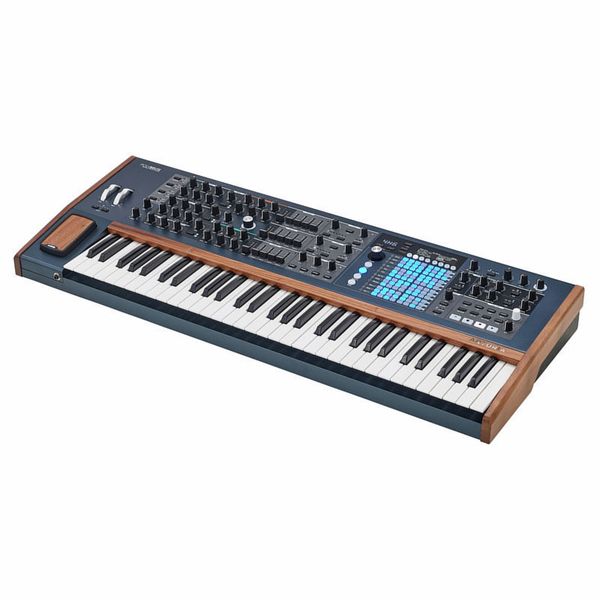
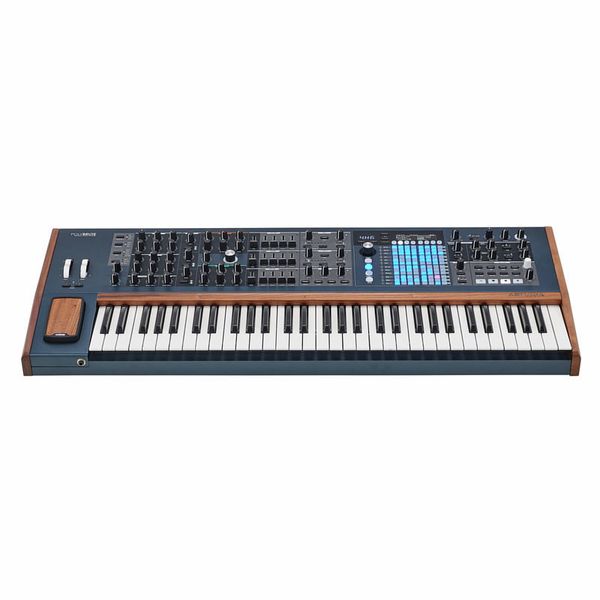
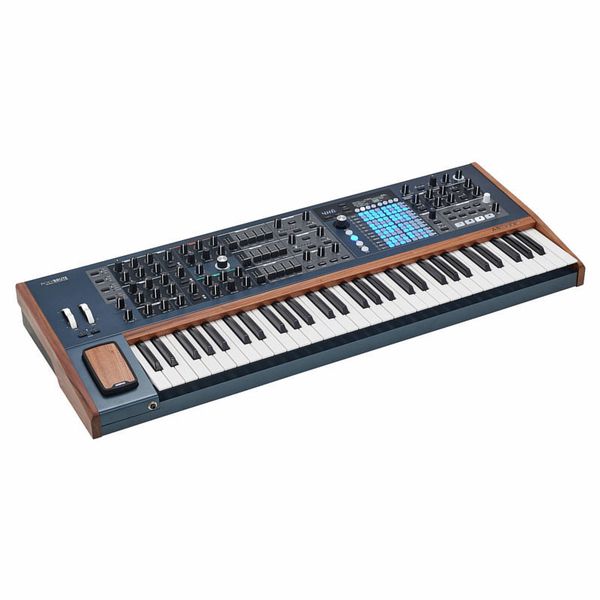
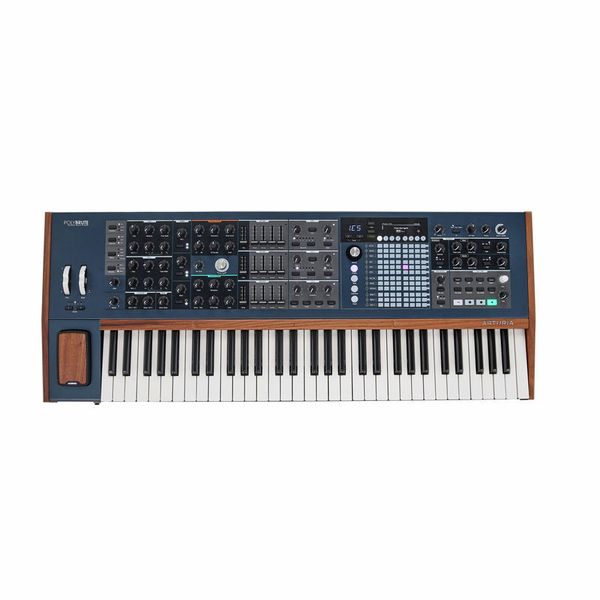
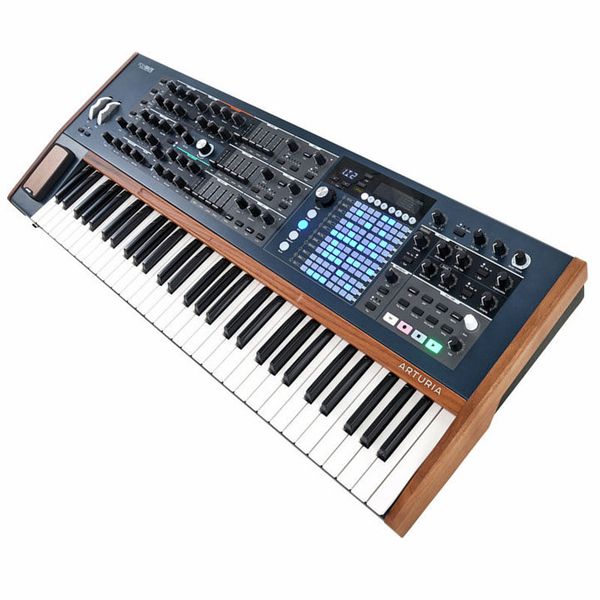
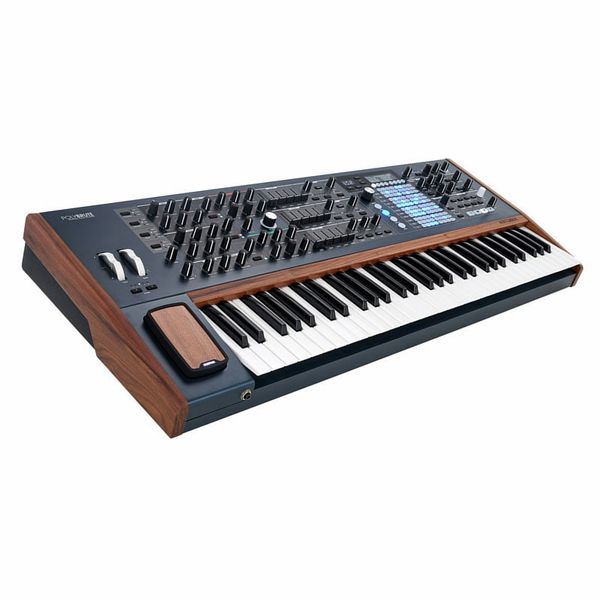
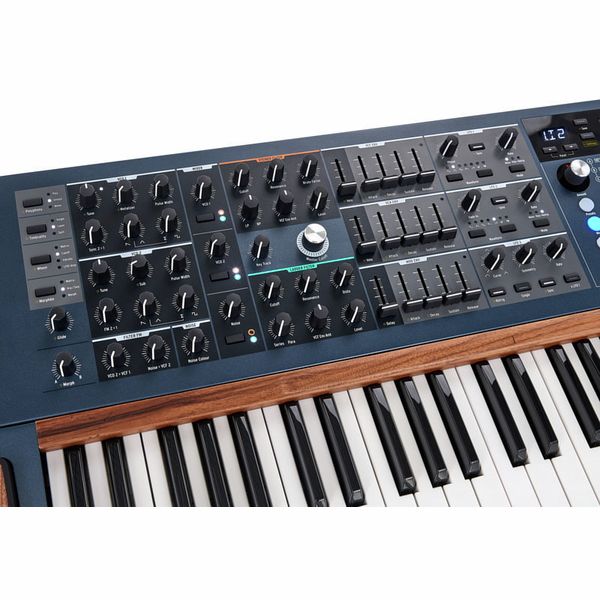
6-Voice Polyphonic Analogue Morph Synthesizer
- 61-key velocity-sensitive keyboard with aftertouch
- Two Brute waveshaping oscillators per voice
- Dual filter design: Steiner multimode and Dr. Bob Moog's 24 dB ladder
- Master Filter Control and Filter FM
- Three LFOs and three envelope generators
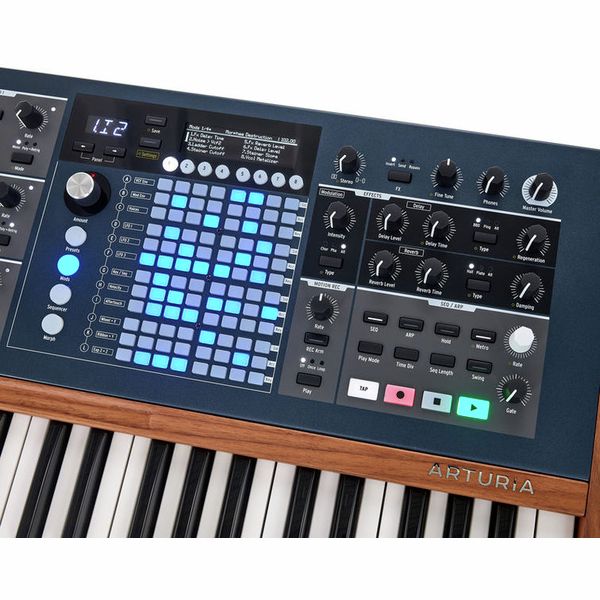
- Matrix interface for modulation, sequencer, and preset control
- 64 matrix points for modular-style patching
- Two states per preset, seamlessly crossfadeable with the morph control
- Keyboard with split and layer function, as well as poly, mono and unison modes
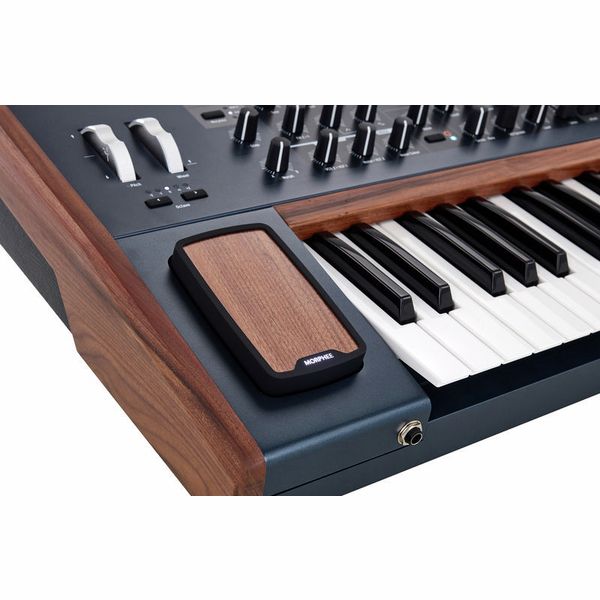
- 3-axis Morphée controller
- Assignable ribbon controller
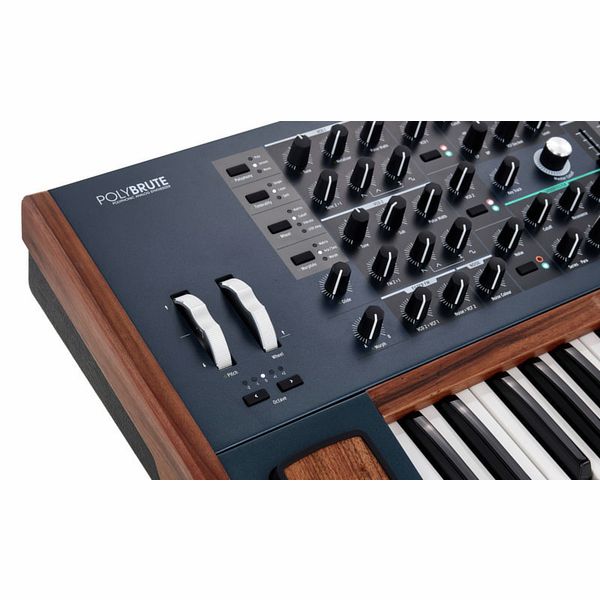
- Pitch wheel and multi-function mod wheel
- 64-step sequencer with motion recorder and automation
- Multi-mode arpeggiator
- Digital stereo effects reverb, chorus and delay
- Display
- Memory protection switch
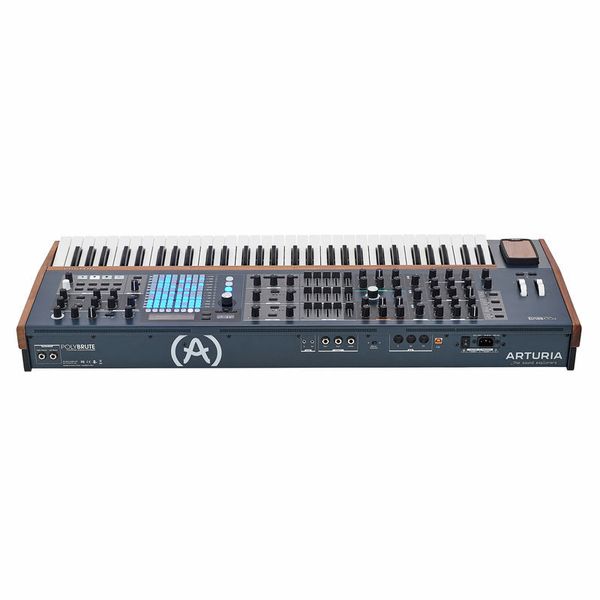
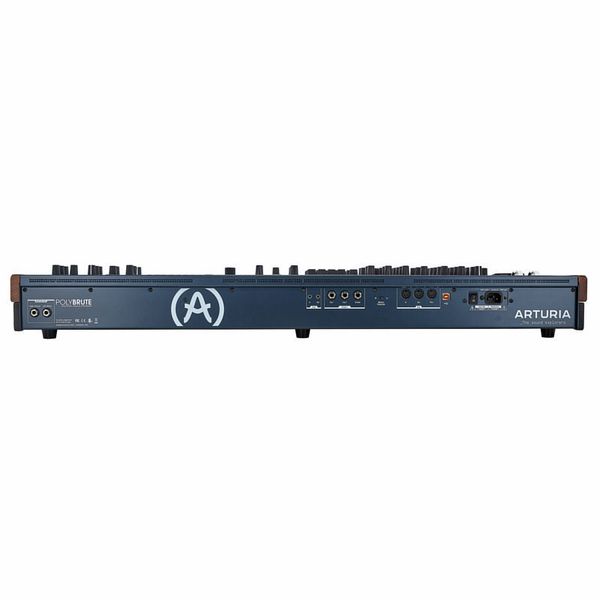
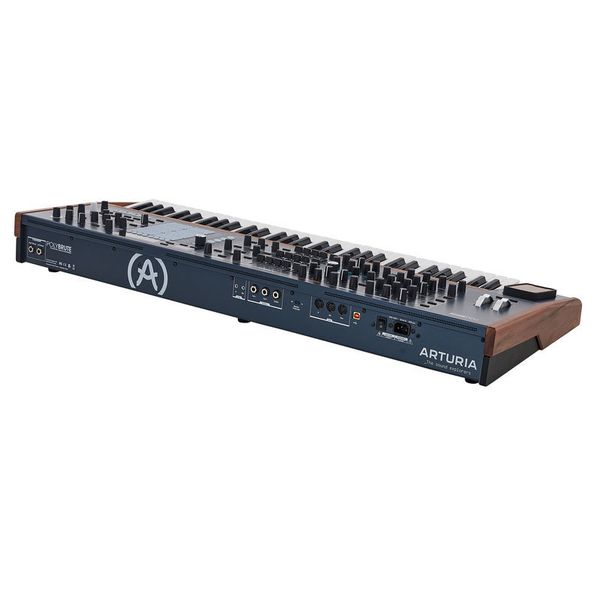
- Two line outputs: 6.3 mm jack unbalanced
- MIDI input and output, and MIDI Thru
- USB MIDI
- Sync input and output: 3.5 mm mini jack
- Inputs for two expression pedals and one sustain pedal: 6.3 mm jack
- Dimensions (W × H × D): 975 × 130 × 378 mm
- Weight: 20 kg
- Includes PolyBrute Connect software (PC/Mac) for library management
-
Available since February 2021
-
Item number 502850
-
Sales Unit 1 piece(s)
-
Number Of Keys 61
-
Touch-Sensitive Yes
-
Aftertouch Yes
-
Split Zones Yes
-
Modulation Wheel Yes
-
Number of simultaneous Voices 6
-
Sound Engine Analogue
-
MIDI interface 1x In, 1x Out, 1x Thru, USB
-
Storage Medium Internal
-
USB-port Yes
-
Effects Yes
-
Arpeggiator Yes
-
Number of Analog Outputs 2
-
Digital Output No
-
Display Yes
-
Pedal Connections 2x Pedal, 1x Sustain
-
Dimensions 975 x 130 x 378 mm
-
Weight 20,0 kg
-

Expressive analogue flagship
The Arturia PolyBrute is a six-voice analogue polysynth designed for expressive sound design and dynamic performance. Its architecture pairs dual oscillators per voice (with wavefolding (Metalizer), PWM, and linear FM) with a dual-filter section combining a Steiner-Parker multimode filter (12dB/octave, including high-pass and notch responses) and a ladder-style low-pass filter (24dB/octave, known for retaining low-end warmth even at high resonance). A deep modulation matrix (16 sources, 32 destinations) and intuitive hands-on interface encourage real-time exploration. Central to its identity is its morphing architecture, allowing seamless transformation between two fully realised sound states, from a soft pad to an aggressive lead – brought to life through Arturia's pressure-sensitive Morphée controller, which turns static patches into evolving textures. A clearly organised control panel supports immediate interaction. Performance tools (aftertouch, ribbon controller, assignable macros) and flexible routing extend its adaptability across studio and stage environments. The PolyBrute stands as a modern analogue platform that prioritises expression, experimentation, and fluid musical interaction.

)
Architecture and modulation
The PolyBrute is built for flexibility and movement, not just vintage sounds. Each voice combines two oscillators that deliver everything from sharp, metallic textures to warm, evolving pads. The signal then passes through two distinct filters: a Steiner-Parker multimode filter (capable of bright, cutting tones) and a ladder-style low-pass filter (for a rich, resonant bass). These filters can be routed in series or parallel, offering a wide spectrum of tonal interactions – from aggressive leads to layered soundscapes. Three envelopes, multiple LFOs, and a powerful modulation matrix enable complex routings reminiscent of modular workflows. Whether tweaking a single parameter or crafting modular-style patches, the PolyBrute gives musicians complete control in creating evolving textures, rhythmic motion, and deep parameter interaction – rather than static preset playback.
)
)
Performance and creative tools
PolyBrute's performance architecture turns sound design into a continuous, hands-on creative process. The Morph function lets performers blend between two complete sound states within a single patch, for seamless transitions or dramatic transformations. The pressure-sensitive Morphée controller adds three-dimensional control over multiple parameters simultaneously, while the ribbon controller and assignable performance controls provide fluid pitch gestures and expressive modulation. Deeply integrated into the modulation matrix, these tools allow complex mappings without interrupting creative flow. A polyphonic sequencer (with per-step automation) and a versatile arpeggiator – including matrix-based patterns – expand the dynamic, creative possibilities. An intelligent random patch function offers musically-coherent inspiration, supporting experimentation without sacrificing usability.
)
About Arturia
Arturia's success story began with software emulations of well-known analogue synthesizers such as the Moog Minimoog, Sequential Prophet-5, and Oberheim SEM. The popular software instruments included in the V Collection are still flagship products of the French developer today. Over time, Arturia has gradually expanded its range and now also offers a host of hardware devices, ranging from synthesizers and keyboard controllers to sequencers. Since then, the former software developer has thus also become a household name in the world of analogue synthesizers and other equipment.
Workflow and studio integration
PolyBrute adapts effortlessly to both studio production and live performance. Single, Split, and Layer modes allow flexible voice allocations for expansive pads, dual textures, or performance-focused setups. The built-in polyphonic sequencer records notes and parameter movements, while the arpeggiator introduces synchronised patterns and rhythmic variation. USB and MIDI connectivity enable direct DAW control, supported by the PolyBrute Connect software for detailed editing, automation, and preset management. Stereo outputs, analogue clock I/O, and multiple pedal inputs facilitate integration into hybrid rigs. Ongoing firmware updates have already expanded effects, routing flexibility, and workflow refinements, reinforcing its role as a contemporary analogue instrument that continues to develop alongside modern production workflows.
)
In the spotlight
Morphée controller and modulation matrix
Central to the PolyBrute's identity is its morphing system, which transforms sound design into an expressive performance. Each preset contains dual sound states that can be continuously blended, allowing gradual evolution or dramatic shifts as the music plays. The pressure-sensitive Morphée controller extends this concept with three-dimensional X/Y/Z control, enabling multiple parameters to move simultaneously through the modulation matrix. With its 16×32 routing architecture, players can shape complex behaviours – from subtle tonal shifts to radical structural changes – without breaking the musical flow. This approach brings modular-style flexibility to a polyphonic synthesizer, encouraging experimentation while remaining eminently playable and performance-oriented.
)
